



What's Happening?
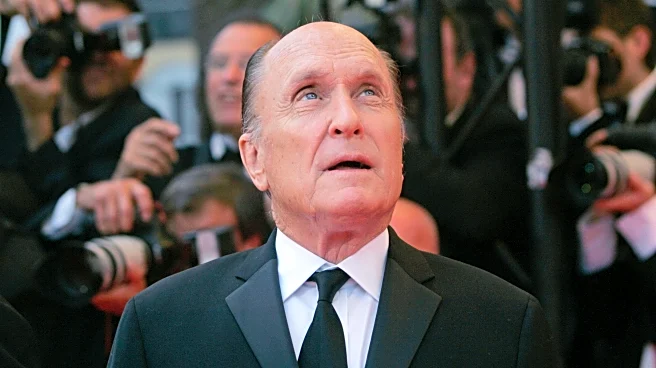
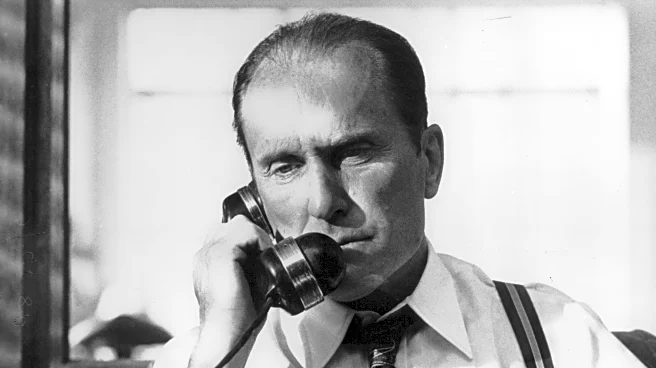
Robert Duvall, the acclaimed actor known for his roles in 'The Godfather' series, 'Apocalypse Now,' and 'Tender Mercies,' has died at the age of 95. His wife, Luciana Duvall, announced his passing in a social media post, stating that he died at home surrounded by love. Duvall's career spanned nearly seven decades, during which he became known for his ability to embody complex characters with moral and ethical struggles. He won an Academy Award for his role in 'Tender Mercies' and received seven Oscar nominations throughout his career. Duvall's performances were marked by a commitment to authenticity, whether playing a quiet, introspective character or a larger-than-life figure like Lt. Col. Kilgore in 'Apocalypse Now.'
Why It's Important?
Robert Duvall's passing
marks the end of an era for Hollywood, as he was one of the last remaining actors from a generation that defined American cinema in the 20th century. His work influenced countless actors and filmmakers, and his dedication to his craft set a standard for performance in film. Duvall's roles often explored themes of redemption, power, and the human condition, resonating with audiences and critics alike. His ability to bring depth and nuance to his characters made him a beloved figure in the industry. The loss of Duvall is significant not only for his contributions to film but also for the cultural impact of his work, which continues to inspire new generations of artists.
What's Next?
In the wake of Robert Duvall's death, tributes from colleagues, fans, and film historians are expected to pour in, celebrating his life and career. Retrospectives of his work may be organized, highlighting his most iconic roles and the influence he had on the film industry. Film institutions and award bodies may honor his legacy with special recognitions or dedications. As the industry reflects on Duvall's contributions, discussions about his impact on acting and storytelling are likely to emerge, potentially influencing future projects and performances inspired by his approach to character development.
Beyond the Headlines
Robert Duvall's career offers a lens into the evolution of American cinema, from the classic films of the 1970s to contemporary storytelling. His ability to adapt to different genres and styles reflects the changing landscape of film over the decades. Duvall's work also highlights the importance of character-driven narratives in exploring societal issues and personal struggles. His performances often challenged audiences to consider complex moral questions, contributing to a broader cultural dialogue about ethics and human behavior. As the film industry continues to evolve, Duvall's legacy serves as a reminder of the power of storytelling to illuminate the human experience.