






What's Happening?
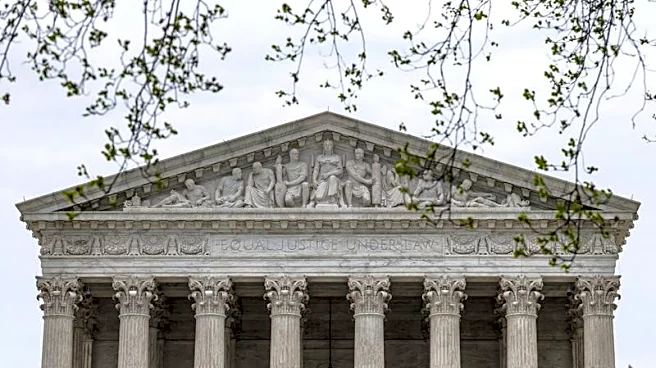
The Congressional Budget Office (CBO) has projected that recent changes in U.S. tariff policy could increase the federal deficit by $1.1 trillion over the next decade. This follows the Supreme Court's invalidation of President Trump's tariffs under the International
Emergency Economic Powers Act (IEEPA), which alone could add $2 trillion to the deficit. The administration's efforts to reimpose tariffs using other statutes, such as Section 122 and Section 301, are expected to recover only a portion of the lost revenue. The CBO's analysis highlights the financial implications of the administration's trade policies.
Why It's Important?
The potential increase in the federal deficit poses significant economic challenges for the U.S. government. A higher deficit could lead to increased borrowing costs and limit the government's ability to invest in other critical areas. The fluctuating nature of tariff policies also creates uncertainty for businesses and consumers, potentially affecting investment decisions and economic growth. Additionally, the impact of tariffs on consumer prices and business costs could exacerbate inflationary pressures, further complicating economic recovery efforts.
What's Next?
The administration's ability to impose new tariffs and adjust existing ones remains a key factor in managing the deficit. However, the unpredictable nature of these policies makes it difficult to forecast long-term economic impacts. The CBO's warning may prompt policymakers to reconsider the balance between trade protectionism and fiscal responsibility. As the administration continues to navigate these challenges, stakeholders will be closely monitoring the effects on the economy and potential legislative responses.