
What's Happening?
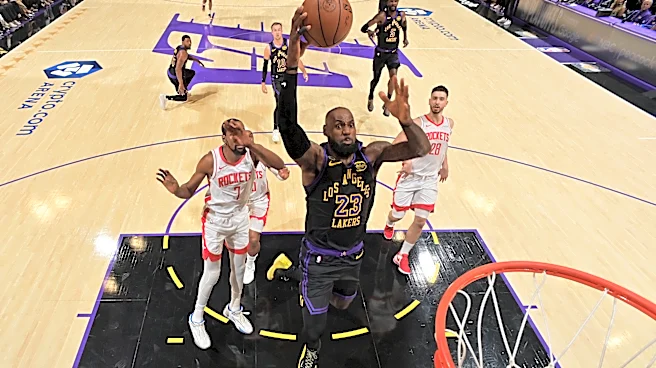
LeBron James, at 41 years old, is showcasing remarkable performance in the NBA Playoffs, leading the Los Angeles Lakers to a 2-0 series lead against the Houston Rockets. Despite the absence of key players
Luka Doncic and Austin Reaves, James has been pivotal in the Lakers' success, scoring 28 points in 39 minutes during Game 2. His performance has been so impactful that the Lakers' odds to win the Western Conference have improved significantly. James' ability to maintain such a high level of play at his age is drawing comparisons to other NBA legends and is considered unprecedented in the league's history.
Why It's Important?
LeBron James' continued excellence in the NBA Playoffs at 41 challenges the conventional wisdom about aging athletes and their ability to perform at elite levels. His performance not only boosts the Lakers' chances in the playoffs but also inspires discussions about longevity and fitness in professional sports. This development is significant for the NBA as it highlights the potential for older athletes to contribute meaningfully to their teams, potentially influencing how teams manage veteran players. Additionally, James' success could impact the Lakers' strategy and morale, as they navigate the playoffs without some of their top scorers.
What's Next?
As the series shifts to Houston for Game 3, the Rockets will aim to leverage home-court advantage and the return of Kevin Durant to turn the series around. The Lakers, relying heavily on James, will need to maintain their momentum to secure further victories. The outcome of this series could have broader implications for the Lakers' playoff run and James' legacy. If James continues to perform at this level, it may prompt discussions about his future in the league and whether he will consider extending his career beyond this season.
Beyond the Headlines
LeBron James' performance raises questions about the evolving nature of athletic careers and the role of sports science in extending peak performance years. His ability to compete at such a high level at 41 could influence how teams approach player development and conditioning. Moreover, James' success may inspire younger players to focus on longevity and career management, potentially reshaping the landscape of professional basketball.