






What's Happening?
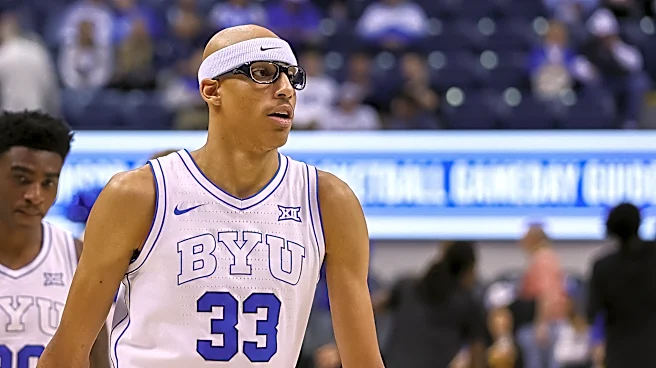
Robert Wright III, a prominent point guard for BYU, is set to enter the transfer portal, marking his third school change in three years. Wright, who had a standout season with BYU, averaged 18.1 points and 4.6 assists per game, shooting 41% from three-point
range. His transfer comes after a controversial move from Baylor to BYU, where he initially signed a contract to return to Baylor before joining BYU. With Wright's departure, BYU faces the challenge of finding a new starting point guard, as he was one of the top scoring guards in the Big 12. Wright's transfer is indicative of the current state of college athletics, where rosters are often built on a short-term basis.
Why It's Important?
Wright's transfer underscores the impact of NIL deals on college sports, where financial incentives can lead to frequent player movement. For BYU, losing Wright means a significant gap in their lineup, as he was a key contributor to the team's success. The situation highlights the competitive nature of college basketball recruiting, where programs must balance attracting new talent with retaining existing players. Wright's move also reflects broader trends in college athletics, where players are increasingly making decisions based on financial opportunities rather than long-term team commitments.
What's Next?
BYU will need to strategize on how to fill the void left by Wright, either by recruiting a similar scoring guard or adjusting their offensive strategy to accommodate a different style of play. The team's approach to NIL deals will be crucial in attracting new talent and retaining current players. As Wright enters the transfer portal, he is expected to be a highly sought-after player due to his scoring ability and remaining eligibility, making him a prime target for other college programs looking to bolster their rosters.