
What's Happening?
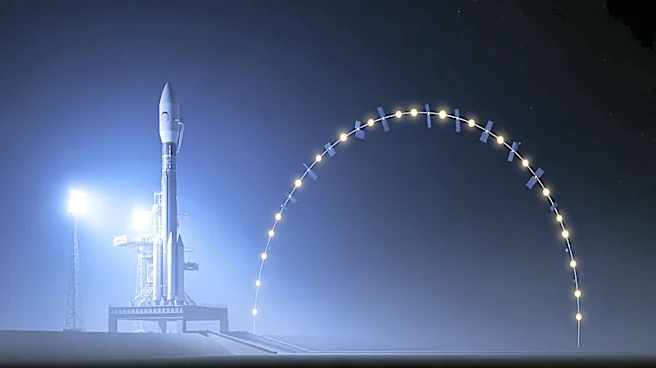
On May 1, 2026, SpaceX successfully launched a batch of 29 Starlink V2 Mini satellites into low Earth orbit from Cape Canaveral Space Force Station. The mission, known as Starlink 10-38, was carried out
using a Falcon 9 rocket, marking the 43rd mission of the year featuring Starlink satellites as the primary payload. The launch took place at 2:06:10 p.m. EDT, with the rocket following a north-easterly trajectory. The first stage booster, identified as B1069, completed its 31st flight and successfully landed on the drone ship 'A Shortfall of Gravitas' in the Atlantic Ocean. This mission contributes to the growing Starlink megaconstellation, which now includes over 10,000 satellites.
Why It's Important?
The successful deployment of additional Starlink satellites is significant for SpaceX's goal of expanding global broadband internet coverage. The Starlink constellation aims to provide high-speed internet access to underserved and remote areas worldwide, potentially transforming internet accessibility. This launch also underscores SpaceX's capability in reusing rocket components, as demonstrated by the repeated use of the Falcon 9 first stage booster. The continued expansion of the Starlink network could have substantial implications for telecommunications, offering new opportunities for connectivity and competition in the internet service market.
What's Next?
SpaceX is expected to continue its aggressive launch schedule to further expand the Starlink constellation. Future missions will likely focus on increasing the network's capacity and coverage, enhancing internet service quality. The company is also working on developing its Starship rocket program, which could play a role in future satellite deployments. As the Starlink network grows, regulatory and competitive responses from other telecommunications companies and governments may shape the landscape of global internet services.