




What's Happening?
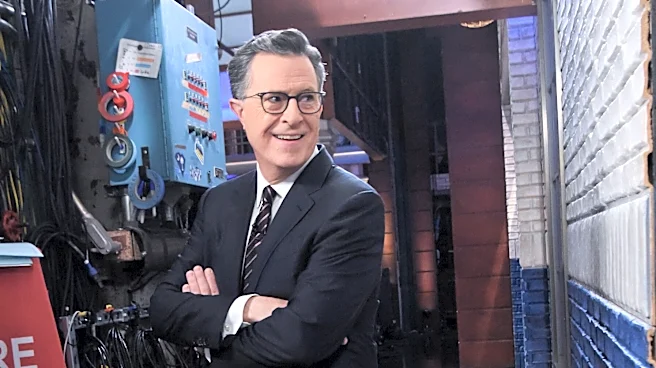
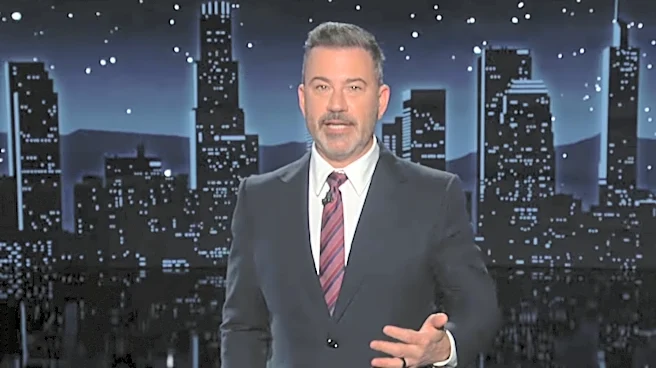
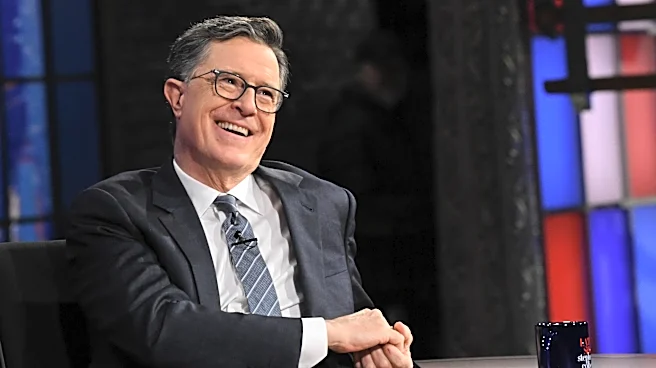
Jimmy Kimmel, host of 'Jimmy Kimmel Live!', has called on his audience to boycott CBS after the network decided to cancel 'The Late Show with Stephen Colbert'. During his monologue, Kimmel expressed his disappointment over the network's decision, urging
viewers to watch Colbert's final episode but then to stop supporting CBS. Colbert's show, which has been on air for nearly 11 years, is ending due to financial losses, reportedly costing CBS $40 million annually. Kimmel's comments have sparked significant backlash online, with critics calling for his own show to be canceled. The controversy is further fueled by speculation that CBS's decision was influenced by political considerations, although the network maintains it was purely a financial decision.
Why It's Important?
The cancellation of Stephen Colbert's show and Kimmel's subsequent call for a boycott highlight the ongoing tensions between media personalities and network decisions driven by financial constraints. This situation underscores the precarious nature of television programming, where even popular shows can be axed if they are not financially viable. The backlash against Kimmel also reflects the polarized media landscape, where political affiliations and public statements can significantly impact a show's reception and longevity. The incident may influence how networks handle politically charged content and the financial risks associated with it.
What's Next?
As the final episode of 'The Late Show with Stephen Colbert' airs, CBS will likely face continued scrutiny over its decision to cancel the show. The network may need to address the backlash from both viewers and media personalities like Kimmel. Additionally, there could be further discussions within the industry about the balance between financial viability and content that resonates with audiences. Kimmel's future with ABC might also be in question if the backlash against him continues to grow.