








What's Happening?
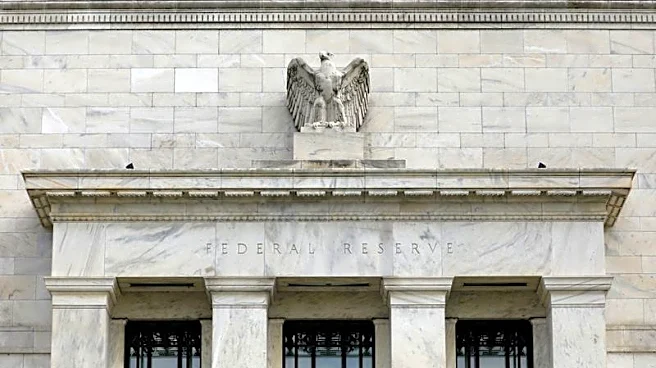
The Federal Reserve has decided to keep interest rates steady, maintaining the federal funds rate in a range of 3.5% to 3.75%. This decision comes as inflationary pressures persist due to the recent U.S.-Israeli war with Iran, which has driven up oil
prices. The Fed's decision affects various consumer financial products, including credit cards, mortgages, and savings rates. Fixed mortgage rates have risen to 6.38%, influenced by long-term Treasury rates and economic uncertainties. Credit card rates remain high, with average annual percentage rates just under 20%. Savings account yields, while lower than recent peaks, remain above inflation rates.
Why It's Important?
The Fed's decision to hold rates steady has significant implications for consumers and the broader economy. High borrowing costs for credit cards and mortgages can strain household budgets, while elevated savings rates offer some relief to savers. The decision reflects the Fed's cautious approach to managing inflation and economic stability amid geopolitical tensions. Consumers and businesses must navigate these financial conditions, which can impact spending, investment, and overall economic growth.
What's Next?
As the Fed maintains its current rate policy, consumers and businesses will continue to face challenges related to borrowing costs and inflation. The potential confirmation of Kevin Warsh as the next Fed chair could influence future monetary policy decisions. Market participants will watch for any changes in geopolitical tensions and their impact on economic conditions. The Fed's future actions will be guided by these developments and their implications for inflation and economic growth.