


What's Happening?
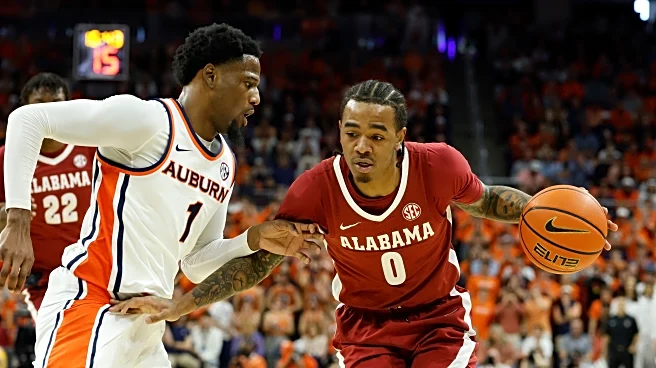
Southeastern Conference Commissioner Greg Sankey has issued an affidavit in support of the NCAA in its eligibility case against Charles Bediako, a player for the Alabama Crimson Tide. Bediako, who played for Alabama from 2021 to 2023, signed an NBA two-way contract but did not play in an NBA game. He later played in the NBA G League and is now seeking to have his college eligibility reinstated. A temporary restraining order from the Tuscaloosa Circuit Court has allowed Bediako to play for Alabama, where he has averaged 9.5 points and 5.0 rebounds in four games. The NCAA had previously denied Alabama's appeal to allow Bediako to play, leading to the lawsuit. An injunction hearing is scheduled for Friday. The case has raised questions about the fairness
of allowing former professional athletes to return to college sports.
Why It's Important?
The case involving Charles Bediako could set a precedent for how the NCAA handles eligibility for athletes who have had professional experience. If Bediako is allowed to continue playing, it may encourage other athletes with professional backgrounds to return to college sports, potentially altering the competitive landscape. This situation highlights the ongoing debate about the NCAA's eligibility rules and their impact on the integrity of college sports. The case also underscores the tension between traditional amateurism principles and the evolving realities of college athletics, including the influence of Name, Image, and Likeness (NIL) deals. The outcome could have significant implications for college sports programs and their recruitment strategies.
What's Next?
The upcoming injunction hearing will be crucial in determining whether Bediako can continue playing for Alabama. The decision could influence future cases involving athletes with professional experience seeking to return to college sports. Stakeholders, including college sports programs and the NCAA, will be closely monitoring the case for its potential impact on eligibility rules and the broader college athletics landscape. The case may also prompt discussions about the NCAA's approach to eligibility and the need for potential reforms to address inconsistencies in rule enforcement.