
What's Happening?
The U.S. services sector experienced a slowdown in March, with the Institute for Supply Management (ISM) reporting a decrease in its nonmanufacturing purchasing managers' index to 54.0 from 56.1 in February.
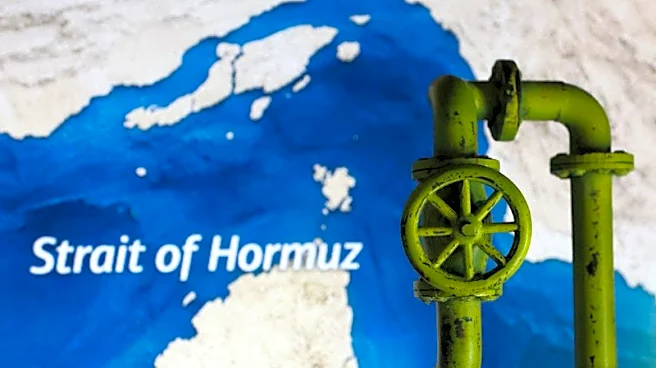
This decline indicates a cooling in the sector's growth, which accounts for over two-thirds of U.S. economic activity. The ISM survey highlighted that prices paid by businesses for inputs surged by the most in over 13 years, driven by the ongoing conflict with Iran. The war has led to a significant increase in global oil prices, impacting logistics costs and contributing to inflationary pressures. Despite the slowdown, businesses reported strong order growth, although employment in the services sector dropped to its lowest level since the end of 2023.
Why It's Important?
The slowdown in the services sector and rising inflationary pressures pose challenges for the Federal Reserve, which may need to reconsider its monetary policy stance. The conflict with Iran has exacerbated global oil price increases, leading to higher costs for businesses and consumers. This situation could force the Fed to maintain higher interest rates for an extended period, impacting borrowing costs and economic growth. The inflationary pressures also highlight vulnerabilities in global supply chains, which are experiencing disruptions due to geopolitical tensions. The situation underscores the interconnectedness of global markets and the potential for regional conflicts to have widespread economic implications.
What's Next?
Economists expect the inflationary impact of the Iran conflict to be reflected in the upcoming March Consumer Price Index report. The Federal Reserve is likely to keep interest rates unchanged in the near term, but persistent inflation could prompt a policy shift. Businesses may need to adjust their strategies to cope with rising costs and supply chain disruptions. The ongoing conflict and its economic repercussions will be closely monitored by policymakers and market participants, as they assess the potential for further escalation and its impact on the global economy.