
What's Happening?
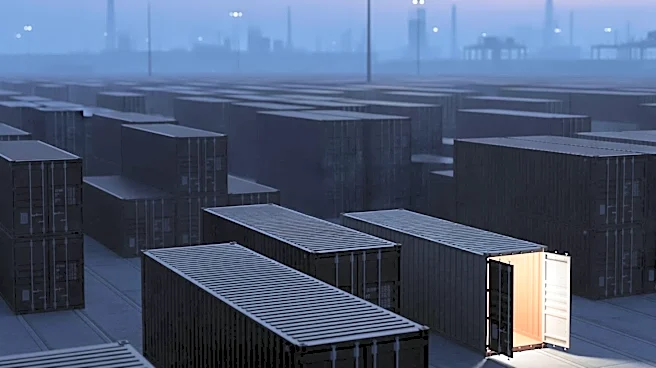
The latest report from Descartes Systems Group indicates a 3.2% decrease in U.S. container imports in April 2026 compared to March. This decline comes after a rebound in March, reflecting ongoing trade
uncertainty and geopolitical risks. The total import volume for April was 2,277,965 twenty-foot equivalent units (TEUs). Notably, imports from China saw a significant drop of 4.3% month-over-month and 15.3% year-over-year. Despite these declines, West Coast ports regained market share over East and Gulf Coast ports, and port transit delays improved. The report highlights the persistent volatility in global shipping, driven by geopolitical tensions, particularly in the Middle East, and unresolved trade relations with major partners like the EU, India, and China.
Why It's Important?
The decline in container imports underscores the challenges faced by U.S. importers amid fluctuating trade policies and geopolitical tensions. The reduction in imports from China, a major trading partner, could impact various U.S. industries reliant on Chinese goods. The ongoing trade policy uncertainty, including Section 122 tariffs and potential policy extensions, adds to the complexity for businesses planning their sourcing strategies. The situation emphasizes the need for U.S. importers to adopt more flexible and diversified sourcing strategies to mitigate risks associated with geopolitical disruptions and tariff uncertainties. This shift could lead to changes in supply chain dynamics and cost structures for U.S. businesses.
What's Next?
As the U.S. navigates these trade challenges, importers may increasingly look to diversify their sourcing away from traditional partners like China. The upcoming tariff refunds scheduled to begin on May 12 could provide some relief, but the broader trade policy landscape remains uncertain. Businesses will likely continue to focus on cost control and flexibility in their supply chains. The resolution of trade relations with key partners such as the EU, India, and China will be crucial in determining future import volumes and trade dynamics. Stakeholders will be closely monitoring any policy changes or geopolitical developments that could further impact trade flows.