


What's Happening?
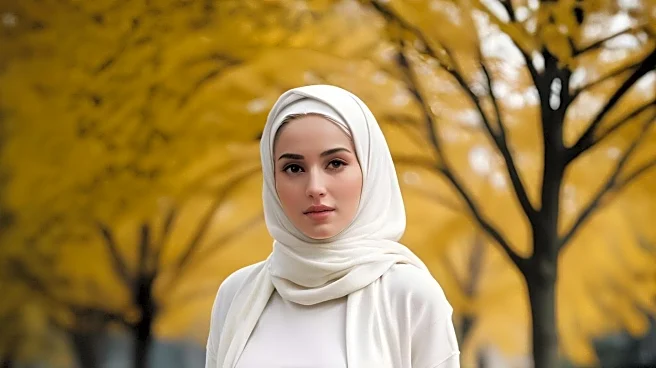
Recent years have seen a significant shift in the portrayal of Muslim women in fiction, moving away from traditional tropes to more nuanced and diverse narratives. Authors like Salma El-Wardany, Mariam Rahmani, and Zahra Barri are creating stories that explore the complexities of Muslim womanhood, faith, and feminism. These works challenge the conventional depictions of Muslim women as either pious or oppressed, instead presenting them as multifaceted individuals navigating their identities. The trend is also evident in young adult literature, with authors like S.K. Ali and Tasneem Abdur-Rashid expanding the scope of Muslim coming-of-age stories. In nonfiction, writers are reclaiming narratives that have historically pitted faith against feminism,
offering fresh perspectives on the intersection of these identities.
Why It's Important?
The emergence of diverse narratives about Muslim women in fiction is crucial for broadening the representation of this group in literature. By moving beyond stereotypes, these stories provide a more accurate and relatable depiction of Muslim women's experiences, allowing readers to see themselves reflected in literature. This shift also challenges prevailing misconceptions and promotes a deeper understanding of Muslim cultures and identities. The growing body of work by Muslim authors contributes to a more inclusive literary landscape, encouraging dialogue about faith, feminism, and identity. It also empowers Muslim women by validating their experiences and offering them a platform to share their stories.
Beyond the Headlines
The evolving portrayal of Muslim women in fiction has broader cultural implications, as it challenges societal norms and encourages a re-examination of gender roles within Muslim communities. By highlighting the diversity of Muslim women's experiences, these narratives can foster greater empathy and understanding across different cultural and religious groups. Additionally, the success of these works may inspire more Muslim women to pursue careers in writing and storytelling, further enriching the literary world with diverse voices and perspectives. This trend also underscores the importance of representation in media, as it can influence public perceptions and contribute to social change.