



What's Happening?
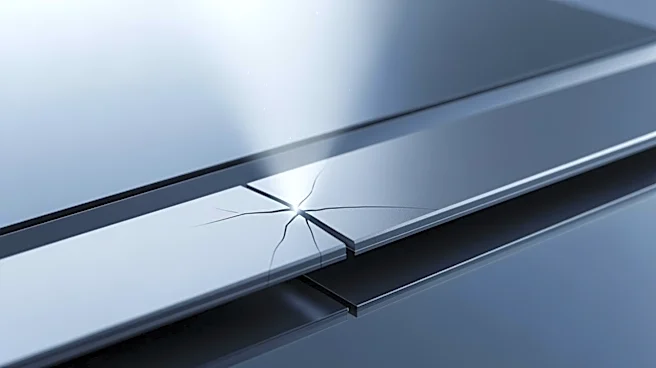
A team of U.S. engineers has developed a fiber composite material capable of healing internal damage over 1,000 times, potentially extending the lifespan of components used in airplanes, cars, and wind turbines. This innovation addresses the issue of delamination,
where internal layers of fiber-reinforced polymer composites separate, compromising structural integrity. The new material incorporates a thermoplastic healing agent and carbon-based heater layers, allowing it to repair itself without external patches or adhesives. Laboratory tests demonstrated the material's ability to withstand 1,000 fracture-and-heal cycles, suggesting a functional life extension from 15-40 years to potentially centuries.
Why It's Important?
The development of this self-healing composite material is significant for industries relying on lightweight composites to enhance fuel efficiency and reduce emissions. By reducing the need for frequent inspections, repairs, and replacements, this material could lower operational costs and environmental impact. The wind energy sector, in particular, stands to benefit, as extending the lifespan of turbine blades could mitigate the challenge of recycling complex composite materials. This technology also holds promise for spacecraft, where on-site repairs are challenging, potentially reducing costs and waste across multiple sectors.