







What's Happening?
The U.S. economy experienced a 2% growth rate from January to March 2026, recovering from a previous federal government shutdown. This growth was reported by the Commerce Department, highlighting a rebound from a 0.5% expansion in the last quarter of
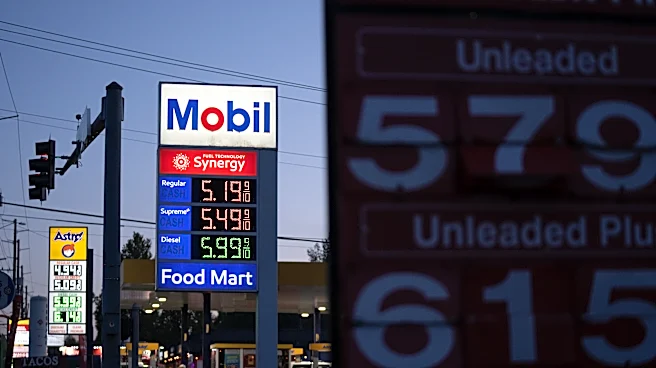
2025. The federal government's spending and investment significantly contributed to this growth, while consumer spending, which makes up 70% of the economic activity, slowed down. Business investment, particularly in artificial intelligence, saw an increase, but the housing market remained weak. The ongoing conflict with Iran, which has led to the blockade of the Strait of Hormuz, is causing energy prices to rise, impacting inflation and consumer spending. The Federal Reserve has maintained its interest rates, citing uncertainties due to the conflict.
Why It's Important?
The growth in the U.S. economy is a positive sign following the federal shutdown, but the ongoing Iran conflict presents significant challenges. The blockade of the Strait of Hormuz is a critical factor, as it affects global oil supply and prices, leading to increased inflation. This situation poses a dilemma for policymakers, as rising energy costs can slow down economic recovery. The Federal Reserve's decision to keep interest rates unchanged reflects the uncertainty and potential risks associated with the conflict. The economic impact is felt across various sectors, with middle and moderate-income households struggling with high gas prices and other expenses.
What's Next?
The U.S. economy's future performance will likely depend on the resolution of the Iran conflict and its impact on global oil prices. Policymakers will need to balance inflation control with economic growth strategies. The Federal Reserve may need to adjust its interest rate policies based on the evolving situation. Additionally, the government's approach to managing the conflict and its economic repercussions will be crucial in determining the overall economic outlook.