






What's Happening?
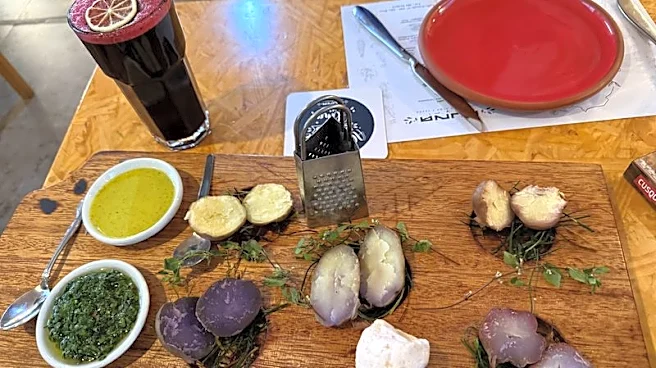
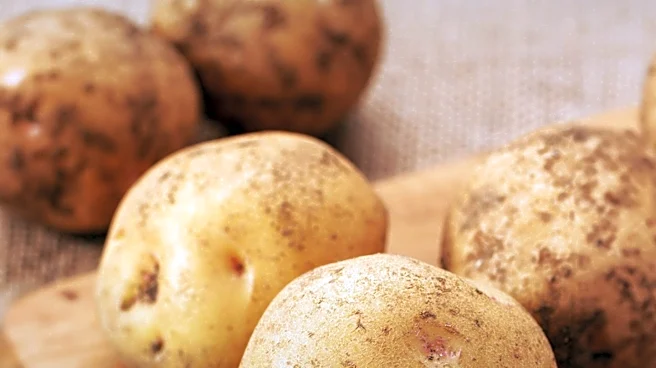
The potato, once considered a dull and unhealthy food, is experiencing a resurgence in popularity. This staple food is now featured prominently on restaurant menus, in food magazines, and across social media. The potato's journey from its origins in the
Andes, where it was born from a chance encounter between two wild plants, to its current status in the global food system is explored. Potatoes USA president Blair Richardson notes the growing worldwide demand and efforts to reshape the potato's image. Nutrition scientist Candida Rebello highlights research suggesting that potatoes are more beneficial and misunderstood than previously thought. In Peru, the International Potato Center works with farmers to conserve thousands of native potato varieties, emphasizing the crop's cultural significance in the Andes.
Why It's Important?
The renewed interest in potatoes underscores a broader trend of rediscovering traditional foods and recognizing their nutritional value. This shift can have significant implications for global food security, as potatoes are a versatile and resilient crop that can be grown in diverse environments. The efforts to reshape the potato's image and promote its benefits may lead to increased consumption and demand, benefiting farmers and the agricultural industry. Additionally, the conservation of native potato varieties in Peru highlights the importance of preserving agricultural biodiversity, which is crucial for adapting to climate change and ensuring food security.
What's Next?
As the potato continues to gain popularity, there may be increased investment in research and development to improve crop yields and nutritional content. The global food industry might see a rise in innovative potato-based products, catering to health-conscious consumers. Efforts to conserve native varieties will likely continue, supported by international collaborations and funding. The potato's revival could also inspire similar initiatives for other traditional crops, promoting a more diverse and resilient global food system.