









What's Happening?
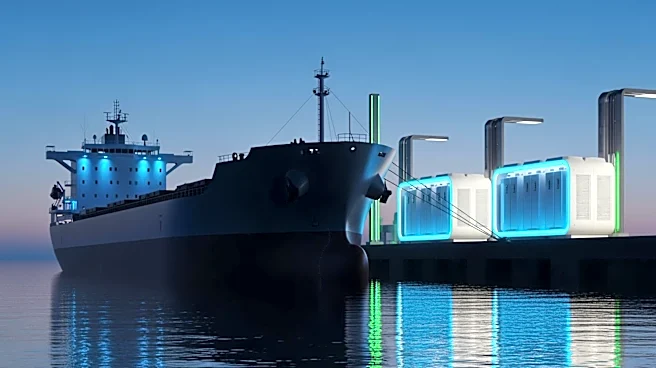
The CSL Group, a leader in marine transportation services, has delivered the MV Yampu, the world's first battery-powered self-unloading bulk carrier. This vessel, designed to transport limestone, was officially delivered at Jiangjiang Nanyang Shipyard
and is set to operate for Adbri in South Australia. The MV Yampu represents a significant advancement in sustainable marine logistics, capable of transporting approximately 2.7 million tonnes of limestone annually, a 35% increase over its predecessor. The ship is equipped with hybrid propulsion technology, reducing diesel consumption by 25% and cutting Scope 1 emissions by 40%. By 2031, it aims to operate fully on electric power, achieving over 90% emissions reduction. This initiative is part of a collaboration between CSL and Adbri, reflecting their commitment to innovation and decarbonization in the maritime industry.
Why It's Important?
The introduction of the MV Yampu marks a pivotal moment in the maritime industry, setting a new standard for low-carbon shipping. This development is crucial as it aligns with global efforts to reduce carbon emissions and combat climate change. The vessel's ability to significantly cut emissions and improve supply chain efficiency highlights the potential for similar innovations across the shipping industry. For Adbri, this means a more reliable and sustainable supply of raw materials, enhancing their operational efficiency and environmental responsibility. The broader impact includes setting a precedent for other companies to adopt similar technologies, potentially leading to widespread reductions in maritime emissions.
What's Next?
As the MV Yampu begins its operations, it will be closely monitored for performance and environmental impact. The success of this vessel could encourage further investment in battery-powered and hybrid ships, accelerating the maritime industry's transition to sustainable practices. Stakeholders, including environmental groups and industry leaders, will likely observe the outcomes to assess the feasibility of scaling such technologies. Additionally, regulatory bodies may consider this development when formulating future maritime policies and standards, potentially influencing global shipping regulations.