






What's Happening?
ROAI, a South Korean startup specializing in physical AI for autonomous manufacturing, has successfully raised $9.4 million in a Series A funding round. The investment was co-led by KB Investment and LB Investment, with participation from Doosan Investment and existing
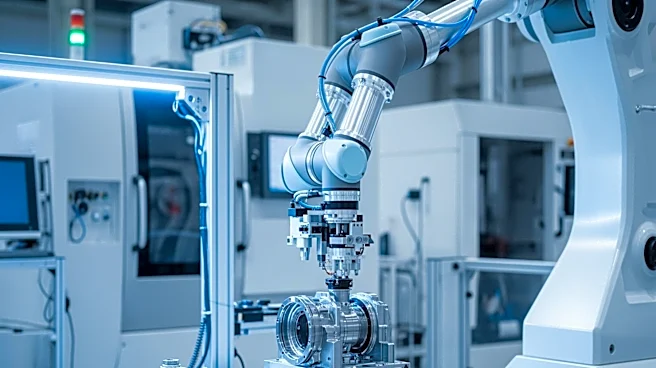
backers such as Futureplay and Schmidt. ROAI, which originated from Hyundai Motor's Manufacturing Solutions division, focuses on integrating AI-powered solutions to bridge the gap between design and factory floor execution. The company's technology autonomously generates optimal routing paths for robots, validated through simulation on the NVIDIA Omniverse platform. This approach has reportedly reduced robot cycle times by up to 20% and decreased on-site deployment lead times. The new funding will be used to complete ROAI's autonomous production infrastructure tech stack and accelerate product development, with a focus on expanding its 'AI Operation' capability.
Why It's Important?
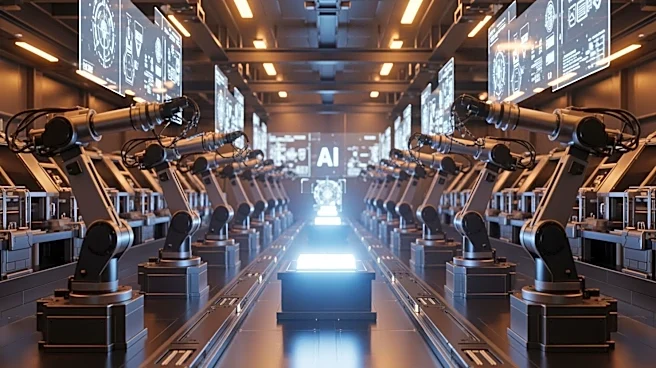
The funding and technological advancements by ROAI are significant for the manufacturing industry, particularly in addressing workforce shortages and improving production efficiency. By automating the process of robot teaching and optimizing production workflows, ROAI's technology can potentially transform manufacturing operations, making them more efficient and less reliant on human intervention. This could lead to cost savings and increased productivity for manufacturers, especially in a global context where labor shortages and production inefficiencies are prevalent. The investment also highlights the growing interest and confidence in AI-driven solutions for industrial applications, which could spur further innovation and investment in the sector.
What's Next?
ROAI plans to use the newly acquired capital to enhance its autonomous production infrastructure and expand its AI capabilities. The company aims to create a full 'AI Factory' environment, allowing production to commence directly from design data. This vision includes scaling deployments across global manufacturers, which could lead to widespread adoption of ROAI's technology in various industries. As the company continues to develop its technology, it may attract further investment and partnerships, potentially positioning itself as a leader in the field of autonomous manufacturing.