



What's Happening?
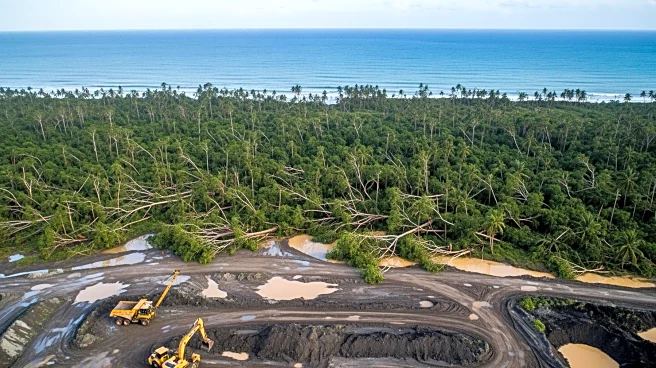
Japan's Sumitomo Corporation has announced that its Ambatovy nickel and cobalt project in Madagascar remains closed following the impact of Tropical Cyclone Gezani. The cyclone, which struck the island last week, caused significant damage to the facilities, prompting an immediate suspension of operations to prioritize safety. The company is currently assessing the extent of the damage, including the condition of equipment and the potential impact on earnings. The Ambatovy project, co-owned by Sumitomo and the Korea Mine Rehabilitation and Mineral Resources Corporation (KOMIR), produced approximately 28,000 metric tons of nickel and 2,500 tons of cobalt in 2024. The timeline for resuming operations is uncertain, with a company spokesperson indicating
that it may take several weeks to fully evaluate the damage.
Why It's Important?
The shutdown of the Ambatovy project could have significant implications for the global supply of nickel and cobalt, both of which are critical components in the production of batteries for electric vehicles and other technologies. A prolonged outage may lead to increased prices for these materials, affecting industries reliant on battery production. The situation underscores the vulnerability of supply chains to natural disasters, particularly in regions prone to extreme weather events. For Sumitomo, the financial impact of the shutdown could be substantial, affecting its earnings and operational plans. The incident also highlights the importance of disaster preparedness and resilience in the mining sector.
What's Next?
Sumitomo is working to quickly assess the damage and collaborate with relevant parties to implement recovery and reconstruction measures. The company aims to determine the full extent of the damage and develop a plan to resume operations as soon as possible. Stakeholders, including traders and industries dependent on nickel and cobalt, will be closely monitoring the situation for updates on the project's status. The potential for increased material prices may prompt companies to seek alternative sources or adjust their supply chain strategies.