
What's Happening?
GIT Coatings has launched its latest innovation, the XGIT-VORTEX propeller coating system, at the Posidonia 2026 event. This next-generation graphene-based coating is designed to improve the long-term
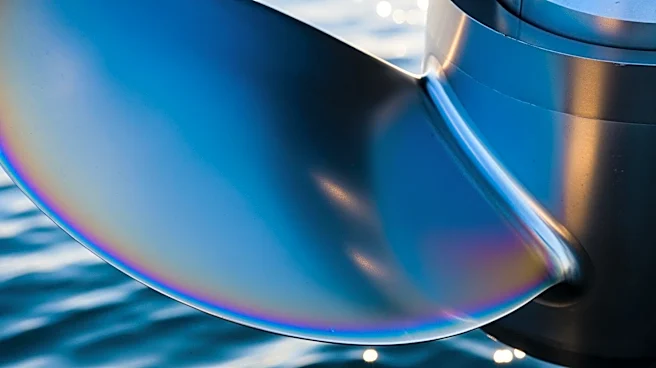
performance of ship propellers by addressing common issues such as fouling build-up, cavitation-related damage, and loss of smoothness over time. The system utilizes GIT's Amphiphilic Graphene Nanonetwork technology, featuring a three-layer structure that includes a foul-release topcoat and a reinforced mid-coat. These layers work together to maintain propeller cleanliness, reduce cavitation stress, and ensure smoothness throughout the drydock cycle. The coating promises up to 5% fuel savings and offers a performance guarantee. The launch was supported by Lloyd's Register, which recently approved GIT's graphene-based hull coating, XGIT-FORCE.
Why It's Important?
The introduction of the XGIT-VORTEX coating is significant for the maritime industry as it addresses the growing need for efficiency and emissions reduction. By enhancing propeller performance, the coating can lead to substantial fuel savings and lower emissions, aligning with global sustainability goals. This innovation supports shipowners in reducing operational costs and improving lifecycle efficiency, which are critical in the face of increasing regulatory pressures such as the Carbon Intensity Indicator (CII) and the European Union Emissions Trading System (EU ETS). The coating's ability to maintain propeller performance over time also reduces maintenance needs, offering a more sustainable and cost-effective solution for commercial fleets.
What's Next?
Following the launch, GIT Coatings is expected to expand the application of the XGIT-VORTEX system across various shipping segments, including tankers and bulk carriers. The collaboration with Lloyd's Register suggests further advancements in marine coating technologies, potentially leading to more innovations in the field. As the maritime industry continues to prioritize emissions reduction and operational efficiency, technologies like XGIT-VORTEX will likely become integral to fleet management strategies. Stakeholders may anticipate further developments in graphene-based coatings and their applications in other areas of ship maintenance and performance optimization.