








What's Happening?
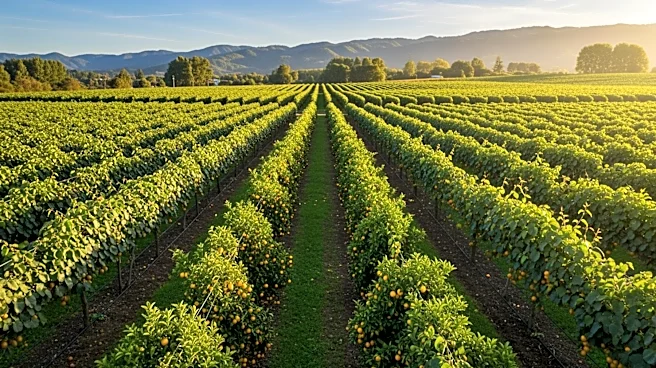
Conservation Resources, a prominent alternative investment firm, has announced the first investment of its second agriculture fund, Conservation Resources Farmland II, L.P. The firm has acquired a 155-acre permanent crop property in California, focusing
on kiwi and citrus production. This acquisition is part of Conservation Resources' strategy to invest in institutional-quality farmland in supply-constrained markets. The firm aims to generate returns through active asset management, which includes regenerative agriculture practices. This approach is intended to enhance soil health, biodiversity, and water conservation, while also providing durable premium returns. The investment is supported by existing investors and new anchor investor Achmea Investment Management B.V., which will advise European institutional investors participating in the fund.
Why It's Important?
This investment underscores the growing interest in sustainable agriculture and the potential for high returns in niche crop markets like kiwi and citrus. By focusing on regenerative agriculture, Conservation Resources is aligning with broader environmental and sustainability goals, which are increasingly important to investors. The acquisition also highlights the scarcity and value of high-quality farmland in California, a region known for its agricultural productivity. For institutional investors, this represents an opportunity to diversify portfolios with assets that offer both financial returns and positive environmental impact. The involvement of Achmea Investment Management B.V. indicates a strong international interest in U.S. agricultural assets, potentially leading to increased foreign investment in the sector.
What's Next?
Conservation Resources plans to continue its investment strategy by targeting additional institutional-quality farmland properties in North America. The firm expects to make further capital calls in 2026 and 2027, indicating ongoing expansion and investment opportunities. As the fund remains open to qualified investors, there may be increased interest from both domestic and international investors seeking exposure to sustainable agriculture. The success of this investment could encourage other firms to adopt similar strategies, potentially leading to a broader shift towards regenerative agriculture practices in the industry.