





What's Happening?
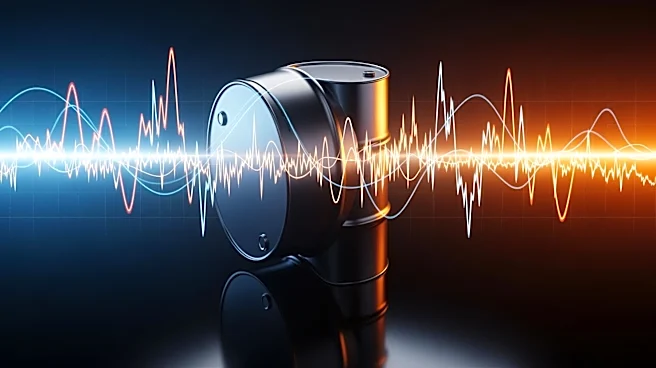
Quantitative trend-following hedge funds, also known as commodity trading advisors (CTAs), have capitalized on the volatility in oil prices due to the Middle East conflict. These funds use machine-learning algorithms and statistical models to identify
price trends across various markets. The recent surge in commodity prices has provided a lucrative trading environment for CTAs, resulting in significant gains. However, with the uncertainty surrounding U.S.-Iran peace negotiations, these funds are now reducing their exposure to oil. The SG CTA Index, a benchmark for trend-following strategies, has risen over 12% year-to-date, reflecting the sector's strong performance.
Why It's Important?
The success of CTAs during this period of volatility underscores the value of quantitative strategies in providing uncorrelated returns and 'crisis alpha' during market turbulence. This highlights the potential for such funds to serve as a hedge against market instability, offering diversification benefits to investment portfolios. The shift in strategies, as CTAs reduce their oil exposure, indicates a cautious approach in response to geopolitical uncertainties. This adaptability is crucial for maintaining performance in volatile markets and could influence the broader hedge fund industry to adopt similar strategies.
What's Next?
As geopolitical tensions continue to influence oil prices, CTAs and other hedge funds will likely adjust their strategies to navigate the evolving market landscape. The focus may shift towards other commodities or financial instruments that offer attractive risk-reward profiles. The ongoing developments in the Middle East and their impact on global energy markets will be closely monitored by investors. Additionally, the performance of CTAs could attract more interest from investors seeking to diversify their portfolios and mitigate risks associated with traditional asset classes.