



What's Happening?
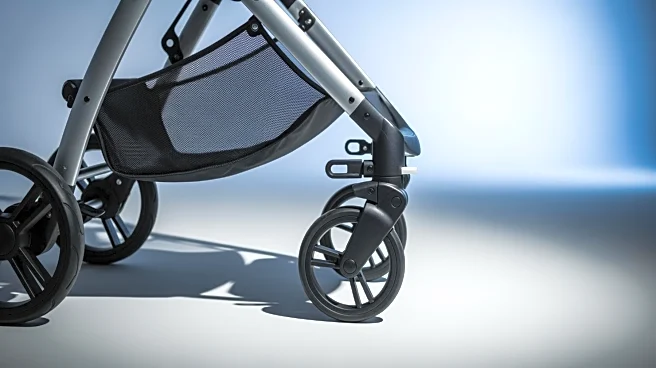
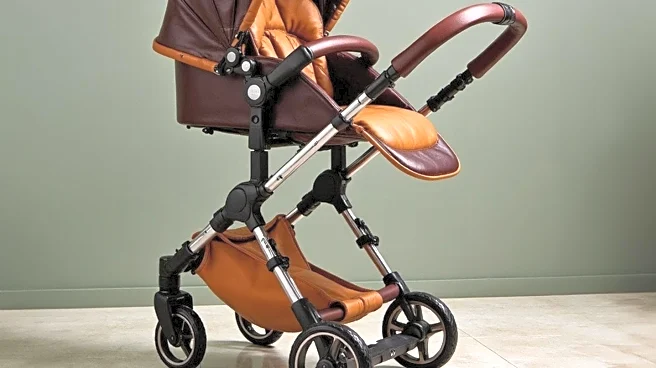
Consumer Reports has conducted extensive testing on strollers, focusing on safety features such as restraint systems, stability, and braking performance. The Zoe Traveler Stroller failed to meet Consumer Reports' stability standards, tipping over at less
than a 12-degree incline during tests. This poses a potential safety risk if a caregiver briefly releases the handle on an incline, potentially causing a child to fall and hit their head. Despite the manufacturer stating that all Zoe strollers meet federal safety requirements and have no reported injuries, Consumer Reports rated the Zoe Traveler as a 'Don't Buy' due to these concerns.
Why It's Important?
The findings by Consumer Reports highlight the importance of rigorous safety testing beyond federal standards to ensure child safety. Parents rely on such evaluations to make informed purchasing decisions, prioritizing their children's safety. The report may influence consumer behavior, leading to decreased sales for the Zoe Traveler and increased scrutiny on stroller safety standards. It underscores the role of independent testing organizations in advocating for higher safety benchmarks, potentially prompting manufacturers to enhance product designs to avoid negative ratings and maintain consumer trust.
What's Next?
Consumer Reports recommends that owners of the Zoe Traveler Stroller keep the seatback upright and maintain a firm grip on the handlebar, especially on inclines, to prevent accidents. The organization also suggests alternative models like the Nuna TRVL LX and Uppababy Minu V3, which performed well in safety tests. This situation may prompt the manufacturer to review and possibly redesign the stroller to address the identified issues. Additionally, other stroller manufacturers might proactively enhance their safety features to avoid similar scrutiny.