
What's Happening?
As the manufacturing and aerospace industries approach 2026, they are undergoing significant transformations driven by AI, automation, and robotics. Dr. Doug Milburn, chairman of the Protocase companies,
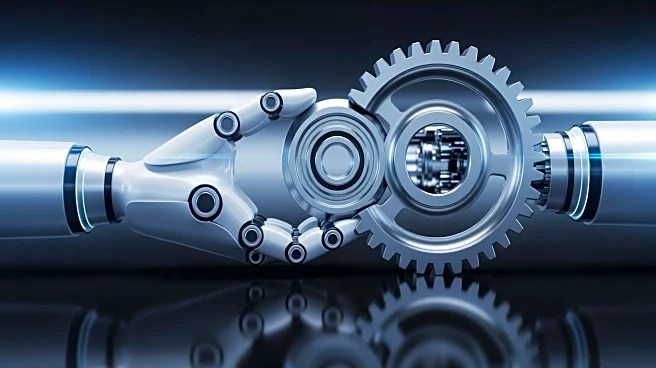
emphasizes that the most successful organizations will treat technology as a partner rather than a replacement for human talent. This approach involves integrating operational excellence with workforce development and strategic foresight. Technologies are reshaping roles by taking on repetitive tasks, allowing human workers to focus on higher-value contributions such as problem-solving and innovation.
Why It's Important?
The integration of technology in manufacturing and aerospace is crucial for maintaining competitiveness in a rapidly evolving global market. By leveraging AI and automation, companies can enhance productivity, precision, and innovation. However, the human element remains essential, particularly in areas requiring creativity, judgment, and decision-making. Organizations that invest in workforce development and create flexible career pathways will be better positioned to adapt to technological advancements and drive strategic growth.
What's Next?
Looking ahead, companies that embrace a human-technology partnership will likely lead in innovation and operational excellence. This involves not only adopting emerging technologies but also fostering a culture of continuous learning and adaptability among employees. As regulatory and trade environments evolve, organizations will need to navigate these complexities strategically to optimize supply chains and expand into new markets. The focus will be on creating environments where technology amplifies human potential, leading to breakthroughs in manufacturing and aerospace.
Beyond the Headlines
The shift towards a human-technology partnership in manufacturing and aerospace highlights broader societal and economic implications. It challenges traditional notions of work and employment, emphasizing the need for policies that support workforce transition and skill development. As industries become more reliant on technology, ethical considerations around data privacy, security, and the impact on labor markets will become increasingly important. The successful integration of technology will depend on balancing innovation with social responsibility and ensuring that the benefits of technological advancements are widely shared.