
What's Happening?
Field robots are becoming increasingly prominent in modern farming, transitioning from niche innovations to essential tools for agricultural operations. Throughout 2025, there has been significant interest
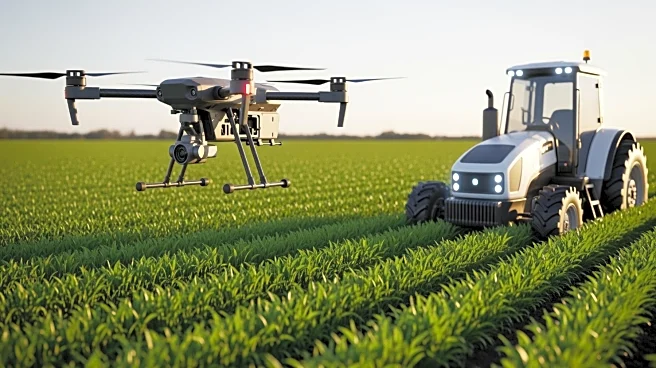
in autonomous machines designed for field and harvest operations, as they address labor shortages and enhance precision and efficiency. The Agritechnica trade fair showcased a record number of new autonomous field robots and applications, highlighting the growing importance of these technologies. Notable developments include the AgBot 5.115T2 traction robot, which performs ploughing with minimal soil pressure, and the AVL Motion S9000 asparagus robot, which is now ready for real-world deployment. These advancements reflect a broader trend towards integrating robotics into farming practices to optimize resource use and increase productivity.
Why It's Important?
The rise of field robots in agriculture is crucial for addressing labor shortages and improving efficiency in farming operations. By automating tasks such as ploughing and harvesting, these robots reduce the need for human labor, which is increasingly scarce and expensive. Additionally, they offer precision techniques that can lower costs and minimize environmental impact, aligning with sustainable farming goals. The integration of robotics into agriculture represents a significant shift towards precision agriculture, where data-driven insights and technology are used to optimize resource use and maximize yields. This trend has the potential to transform the agricultural industry, making it more resilient and adaptable to changing economic and environmental conditions.
What's Next?
As field robots continue to gain traction in agriculture, further advancements and integrations are expected. Farmers like Marijn Vermuë are testing how these robots can be incorporated into their operations to achieve maximum efficiency and yield. The focus will likely be on refining these technologies to ensure they can reliably perform tasks and integrate into broader farm management strategies. Stakeholders, including agricultural researchers and technology developers, will continue to explore ways to enhance the capabilities of field robots, potentially leading to new applications and innovations in precision agriculture.
Beyond the Headlines
The adoption of field robots in agriculture raises important ethical and cultural considerations. As these technologies become more prevalent, there may be concerns about the displacement of human labor and the impact on rural communities that rely on traditional farming jobs. Additionally, the shift towards automation in agriculture could lead to changes in the cultural landscape of farming, as the role of human labor evolves. These developments may prompt discussions about the balance between technological advancement and the preservation of traditional farming practices.