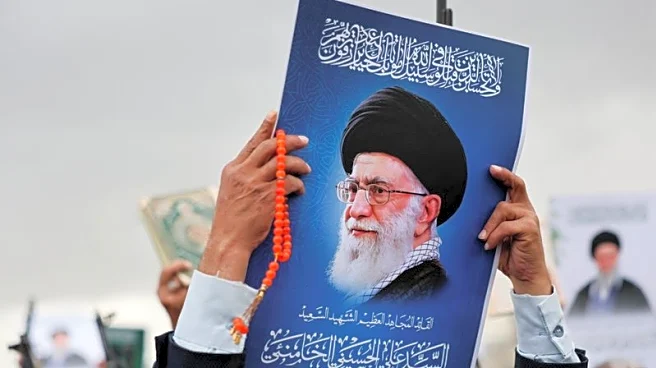




What's Happening?
The recent attacks on Iran by the U.S. and Israel have led to a significant increase in oil prices, with potential disruptions to global supply chains. The closure of the Strait of Hormuz, a critical passage for oil transport, has exacerbated the situation,
causing shipping companies to divert routes and increasing costs. The conflict has raised concerns about the stability of oil markets and the potential for further price hikes, impacting industries reliant on energy and transportation.
Why It's Important?
The rise in oil prices has far-reaching implications for global economies, particularly for countries heavily reliant on oil imports. Increased costs for transportation and manufacturing could lead to inflationary pressures, affecting consumers and businesses. The situation highlights the vulnerability of global supply chains to geopolitical tensions and the need for strategic energy policies. The U.S., as a major player in the global oil market, must navigate these challenges to ensure market stability and economic resilience.
What's Next?
As the conflict continues, stakeholders will likely engage in diplomatic efforts to de-escalate tensions and stabilize the market. The U.S. may consider increasing domestic production or exploring alternative supply routes to mitigate the impact of the conflict. The outcome of these efforts will have significant implications for global energy markets and economic stability. Ongoing monitoring and strategic decision-making will be crucial in addressing the challenges posed by the conflict and ensuring long-term market resilience.