
What's Happening?
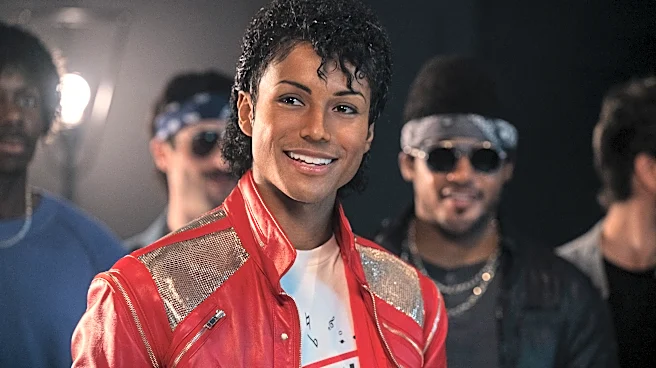
The new biopic 'Michael,' directed by Antoine Fuqua, has been released, focusing on the life of Michael Jackson. The film, sanctioned by Jackson's estate, has drawn attention for its omission of the controversies
surrounding Jackson, particularly the allegations of child sexual abuse. The movie, which ends before these allegations came to light, presents a sanitized version of Jackson's life, focusing on his musical achievements and struggles with his father. The film has been criticized for not addressing the darker aspects of Jackson's life, which have been the subject of public scrutiny and legal battles. Despite this, the film attempts to capture the essence of Jackson's musical genius and his impact on pop culture.
Why It's Important?
The release of 'Michael' highlights the ongoing debate about how to handle the legacies of public figures with controversial pasts. By omitting significant controversies, the film raises questions about the responsibility of filmmakers to present a balanced view of historical figures. This approach could influence public perception, potentially overshadowing the complexities of Jackson's life and the serious allegations against him. The film's focus on Jackson's musical legacy may appeal to fans, but it also risks perpetuating a narrative that ignores critical aspects of his life. This has broader implications for how biopics are produced and the ethical considerations involved in storytelling.
What's Next?
As 'Michael' continues to be shown in theaters, it is likely to spark discussions about the portrayal of controversial figures in media. Critics and audiences may call for more comprehensive narratives that address both the achievements and the controversies of such figures. The film's reception could influence future projects about Jackson and similar figures, potentially leading to more nuanced portrayals. Additionally, the response to 'Michael' may impact the strategies of Jackson's estate in managing his legacy and public image.