



What's Happening?
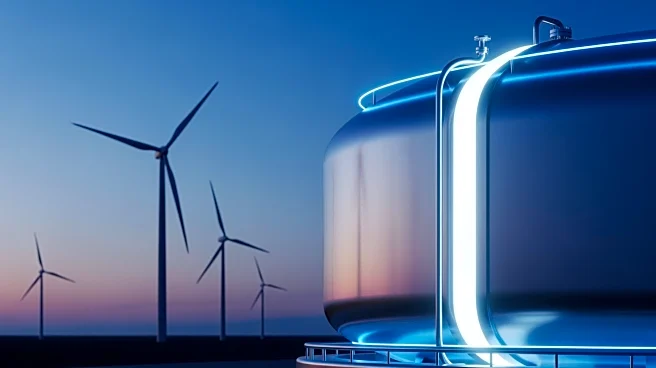
Highview Power, a UK-based company, is advancing its plans to implement liquid air energy storage technology, aiming to store up to 7 gigawatt-hours of renewable energy. This technology involves compressing and cooling air into a liquid state, which can then be stored and later expanded to drive turbines and generate electricity. The company initially proposed a similar project in Vermont in 2019, but it did not materialize. However, Highview is now focusing on the UK, where it plans to build two large-scale facilities by 2030, supported by the UK government's energy storage initiatives. The technology offers a longer duration of energy storage compared to conventional lithium-ion batteries, which are limited by cost and capacity constraints.
Why It's Important?
The development of liquid air energy storage is significant as it addresses the limitations of current energy storage solutions like lithium-ion batteries, which are costly and have limited storage duration. By providing a longer-term storage solution, this technology can enhance the reliability and efficiency of renewable energy sources such as wind and solar. This advancement is crucial for the transition to a more sustainable energy system, reducing reliance on fossil fuels and supporting the integration of renewable energy into the grid. The success of such projects could also stimulate investment and innovation in energy storage technologies, potentially leading to broader adoption and cost reductions.
What's Next?
Highview Power plans to construct two 3.2 gigawatt-hour facilities in the UK by 2030, with one in Hunterston, Scotland, and another in Killingholme, Lincolnshire. These projects are part of the UK's energy storage cap-and-floor platform, which provides financial security for investors. The company is also working on a 300 megawatt-hour facility in Manchester, expected to be operational later this year. The outcome of these projects could influence future energy storage policies and investments, both in the UK and internationally. Highview's progress will be closely monitored by stakeholders in the energy sector, as it could set a precedent for similar initiatives worldwide.