



What's Happening?
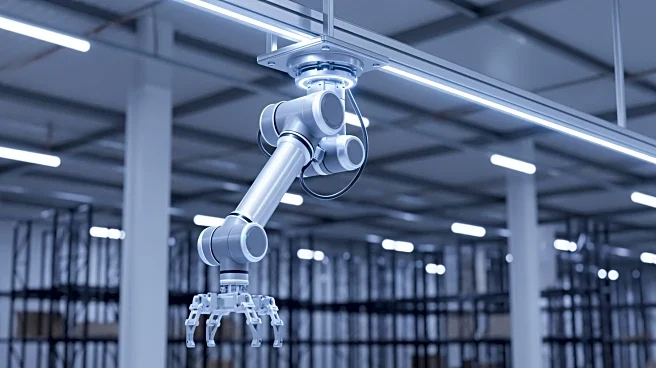
AutoPallet Robotics has unveiled a new approach to warehouse automation with its 'upside-down' autonomous mobile robots (AMRs). These robots are designed to improve palletizing density by operating from the ceiling, a method that allows for high-density automation without the need for extensive redesigns of existing warehouse layouts. The robots use a vacuum gripper to pick up boxes and transport them to designated drop locations. This system is supported by a freestanding modular superstructure that bolts into the warehouse floor, enabling flexible and dense sortation and palletizing. The robots are self-contained, battery-powered units that communicate wirelessly, allowing them to operate efficiently in a swarm without collisions. This innovation
was demonstrated at Manifest 2026, showcasing its potential to revolutionize warehouse operations.
Why It's Important?
The introduction of AutoPallet's 'upside-down' robots represents a significant advancement in warehouse automation technology. By utilizing ceiling space, these robots offer a solution to the limitations of traditional automation systems, which often require significant floor space and infrastructure changes. This innovation could lead to increased efficiency and cost savings for businesses by maximizing the use of existing space and reducing the need for extensive modifications. The ability to handle mixed streams of diverse cases and build dense pallets in the same zone enhances operational flexibility and throughput. As warehouses continue to face pressure to optimize operations and reduce costs, such technologies could provide a competitive edge in the logistics and supply chain sectors.
What's Next?
AutoPallet Robotics plans to continue developing its system, including simulation and orchestration software to manage operations. The company aims to integrate advancements in AI for both robot arms and AMRs to further enhance the capabilities of its system. As the technology gains traction, it is likely that more warehouses will adopt this innovative approach, potentially leading to widespread changes in warehouse design and operation. Stakeholders in the logistics industry may closely monitor the performance and scalability of AutoPallet's system as they consider integrating similar technologies into their operations.
Beyond the Headlines
The deployment of AutoPallet's robots could have broader implications for the labor market in the logistics sector. As automation becomes more prevalent, there may be shifts in the types of skills required for warehouse jobs, with a greater emphasis on technical and maintenance roles. Additionally, the environmental impact of warehouse operations could be reduced through more efficient use of space and resources. The success of AutoPallet's system could also inspire further innovation in the field of robotics, encouraging other companies to explore unconventional approaches to automation challenges.