

What's Happening?
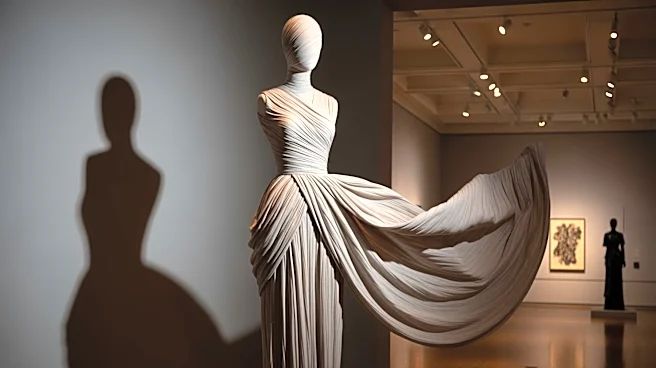
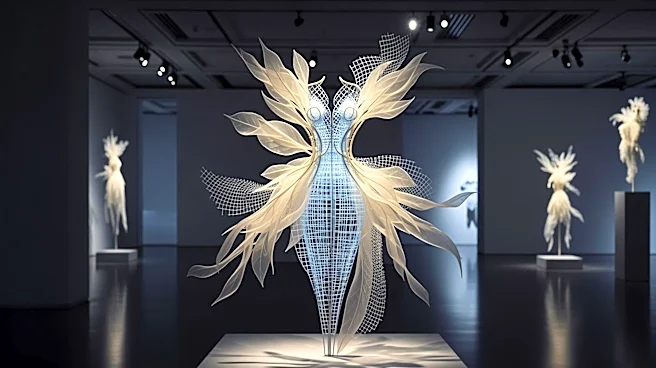
The Brooklyn Museum is hosting an exhibition titled 'Sculpting the Senses' featuring the work of Dutch designer Iris van Herpen. Known for her avant-garde fashion, van Herpen draws inspiration from natural phenomena such as coral systems, skeletons, and
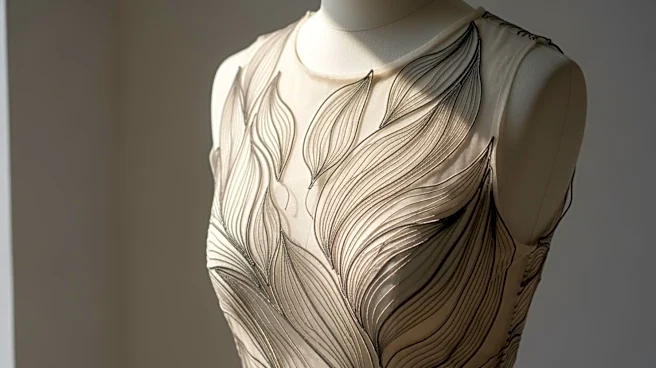
bird movements. The exhibition showcases over 140 pieces, including designs for celebrities like Lady Gaga and Björk. Van Herpen's work is characterized by its use of cutting-edge technology, including 3D printing and silicone molding, to create dynamic garments that move with the wearer. The exhibition also includes collaborations with contemporary artists and explores themes of biology, technology, and the cosmos.
Why It's Important?
Iris van Herpen's work represents a significant intersection of fashion, technology, and art. By incorporating elements of nature and advanced fabrication techniques, her designs challenge traditional notions of fashion and push the boundaries of what garments can be. This exhibition not only highlights her innovative approach but also reflects broader trends in the fashion industry towards sustainability and the integration of technology. It underscores the potential for fashion to serve as a medium for artistic expression and cultural commentary, influencing both industry practices and consumer perceptions.
What's Next?
The exhibition, running until December 6, 2026, is expected to attract fashion enthusiasts, art lovers, and technology aficionados. It may inspire further collaborations between fashion designers and artists, as well as encourage the adoption of sustainable practices in the industry. As van Herpen continues to explore the future of fashion, her work could influence emerging designers and shape the evolution of couture. The exhibition's success could lead to similar showcases in other major cities, expanding the reach of van Herpen's visionary designs.
Beyond the Headlines
Iris van Herpen's work raises questions about the future of human interaction with technology and nature. Her designs, which often incorporate elements of the 'post-human' future, suggest a world where human forms are integrated with natural elements. This perspective challenges viewers to consider the long-term impact of technological advancements on human evolution and the environment. The exhibition invites reflection on the role of fashion as a cultural artifact that can both preserve and transform societal values.