


What's Happening?
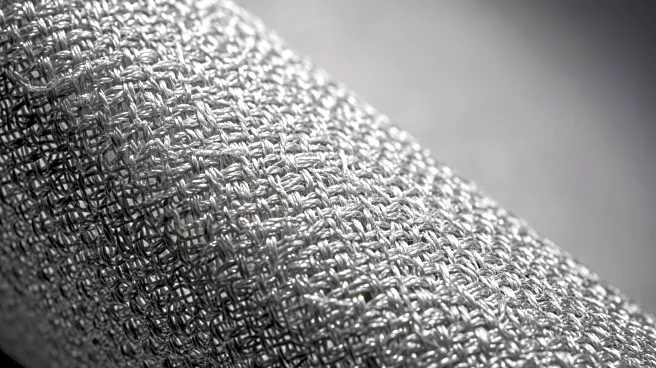
The global Leno Weave Fabrics market is projected to experience moderate, sustained growth from 2026 to 2035, according to a report by IndexBox. This growth is driven by the increasing use of leno fabrics in advanced technical applications, such as reinforcement
scrims in composite materials for automotive and wind energy sectors. The market is characterized by its stable, open-mesh construction, which is essential for applications ranging from industrial filtration to agricultural shade nets. The report highlights that while traditional applications provide volume stability, the real growth vector lies in the penetration of leno fabrics into high-performance sectors. The market's evolution is expected to be influenced by technological advancements and the demand for more stringent specifications in technical textiles.
Why It's Important?
The projected growth of the Leno Weave Fabrics market is significant for several industries, particularly automotive and wind energy, where these fabrics are used as reinforcement materials. The increasing demand for lightweight and durable materials in these sectors is driving innovation and adoption of leno fabrics. This growth also reflects broader trends in industrial efficiency and material science advancements. As industries seek higher-performing materials, the demand for leno fabrics is expected to rise, impacting manufacturers, investors, and stakeholders in the technical textiles market. The market's expansion could lead to increased economic activity and job creation in regions with strong textile manufacturing capabilities.
What's Next?
The market is expected to see a consolidation of larger, integrated players who can leverage scale in standard products, while niche specialists thrive in custom, high-specification weaves. Regional production is likely to concentrate in Asia-Pacific, although proximity sourcing for North American and European markets may gain traction. The market's growth will depend on geopolitical stability and predictable trade policies, with raw material cost volatility posing a potential challenge. As the market evolves, manufacturers and investors will need to adapt to changing demand dynamics and technological advancements to remain competitive.
Beyond the Headlines
The growth of the Leno Weave Fabrics market could have broader implications for environmental sustainability, as the demand for eco-friendly and high-performance materials increases. The market's expansion may also drive innovation in weaving technology, enabling more complex and high-performance fabric constructions. Additionally, the shift towards synthetic fiber-based leno weaves could address environmental and regulatory pressures related to textile manufacturing processes. As industries continue to prioritize sustainability, the leno fabrics market may play a crucial role in supporting these efforts.