


What's Happening?
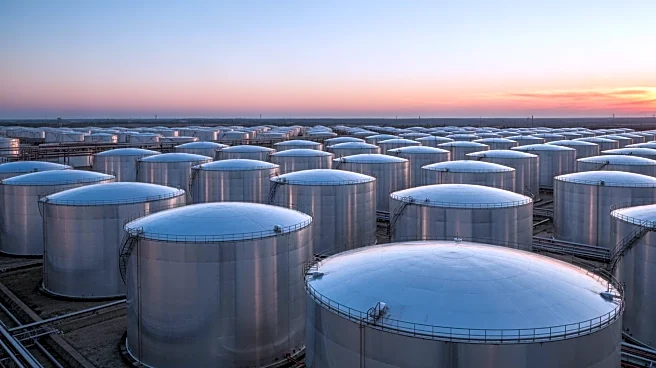
U.S. crude oil inventories experienced a significant increase, rising by 16 million barrels last week, as reported by the Energy Information Administration (EIA). This rise far exceeded analysts' expectations of a 1.5-million-barrel increase. The EIA also
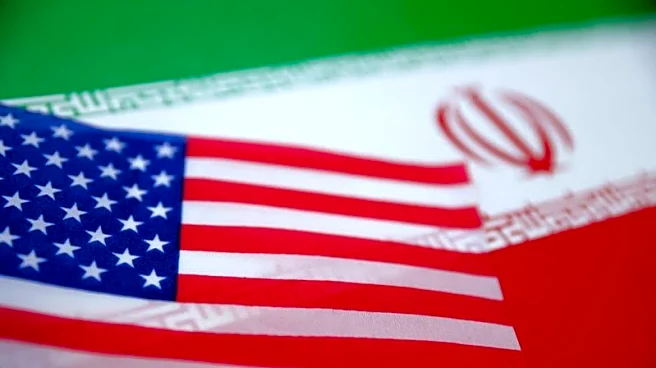
noted a record adjustment number of 2.7 million barrels per day, accounting for unaccounted changes in crude stocks. Despite this substantial build, the impact on oil prices was limited due to ongoing geopolitical tensions in the Middle East, particularly concerning potential military conflict between the U.S. and Iran. President Trump has indicated a possible military response to Iran's nuclear ambitions, which has contributed to market volatility. Additionally, Saudi Arabia has prepared a contingency plan to increase oil output and exports if U.S.-Iran tensions disrupt oil flows.
Why It's Important?
The unexpected surge in U.S. crude inventories highlights the complexities of the global oil market, where supply dynamics are heavily influenced by geopolitical factors. The potential for conflict in the Middle East, a critical region for oil production, poses a significant risk to global oil supply stability. This situation underscores the delicate balance between supply and demand in the oil market, where political developments can swiftly alter market conditions. The U.S. crude stock build also reflects domestic factors such as refinery utilization rates and import levels, which are crucial for understanding the broader energy landscape. The ongoing tariff uncertainties introduced by President Trump's recent global tariff imposition further complicate the economic environment, potentially affecting international trade relations and market confidence.
What's Next?
Looking ahead, the oil market will closely monitor developments in U.S.-Iran relations, as any escalation could lead to significant disruptions in oil supply from the Middle East. OPEC+ is also expected to consider increasing oil output to meet peak summer demand and counterbalance potential supply disruptions. The group's decision will be influenced by the evolving geopolitical landscape and its impact on oil prices. Additionally, the U.S. administration's tariff policies will continue to be a focal point for investors, as changes in tariff rates could have far-reaching implications for global trade and economic stability.