







What's Happening?
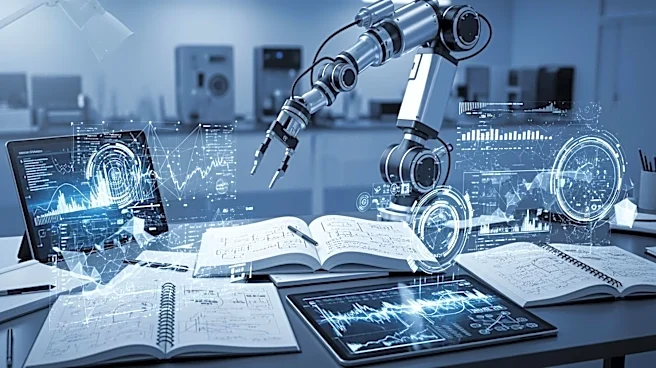
Robotics engineering is experiencing a significant challenge in knowledge retention due to the rapid evolution of its subfields, including mechanical engineering, electrical engineering, computer science, and artificial intelligence. The traditional approach
of relying on documentation is proving insufficient as it does not ensure knowledge transfer during critical decision-making moments. Engineers often face the 'forgetting curve' when switching between complex domains, leading to a drain on productivity as they spend considerable time relearning information. Robotics firms are encouraged to integrate continuous learning into their engineering processes, utilizing modern tools like AI-driven flashcard systems to help engineers retain complex snippets of code or hardware specifications. This approach aims to prevent the loss of 'tribal knowledge' when engineers leave teams, which can slow down innovation and lead to burnout.
Why It's Important?
The bottleneck in knowledge retention within robotics engineering has broader implications for the industry’s ability to innovate and maintain productivity. As robotics technology advances, the complexity of projects increases, requiring engineers to manage vast amounts of rapidly changing technical information. Failure to address this issue can result in stalled projects and reduced competitiveness in the global market. By prioritizing knowledge retention, firms can ensure that their teams are equipped to handle the challenges of developing autonomous and interactive robots, which are crucial for the future of the industry. This shift is not just a luxury but a technical necessity to keep pace with the machines being built and to prevent the best minds from being stuck in a loop of forgetting and relearning.
What's Next?
Robotics firms are likely to adopt more active learning systems and tools to enhance knowledge retention among engineers. This includes the use of spaced repetition tools and a shift in how projects are documented. By investing in these systems, firms can free up mental energy for engineers to focus on solving complex problems related to autonomy and interaction, rather than spending time on remembering technical specifications. The industry may also see a cultural shift where continuous learning becomes an integrated part of the engineering process, rather than a one-time event during onboarding. This approach will help maintain the pace of innovation and prevent burnout among engineering teams.
Beyond the Headlines
The challenge of knowledge retention in robotics engineering highlights the need for a cultural change within the industry. Embracing systems that prioritize retention over searching can lead to a more sustainable work environment, where engineers are not overwhelmed by the constant influx of new information. This shift can also foster a more collaborative atmosphere, where knowledge is shared and retained effectively, reducing the risk of losing critical project history when team members leave. Additionally, the focus on knowledge retention can drive advancements in educational practices, encouraging students to build a portfolio of capabilities that include internships, real-world projects, and certifications to stay competitive in a rapidly changing job market.