


What's Happening?
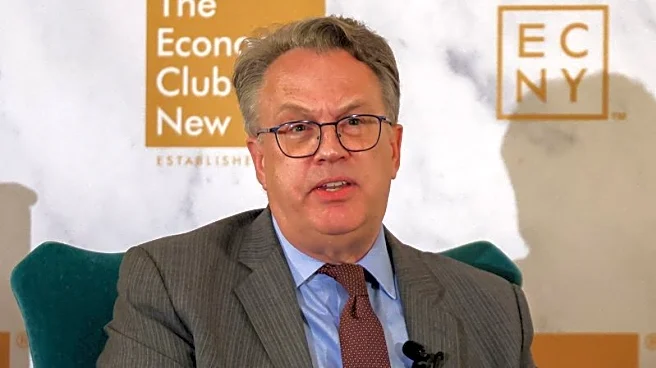
Federal Reserve Chair Jerome Powell addressed concerns about potential interest rate hikes due to rising oil prices during a speech at Harvard University. Powell stated that the inflation outlook remains stable, suggesting that the central bank does not
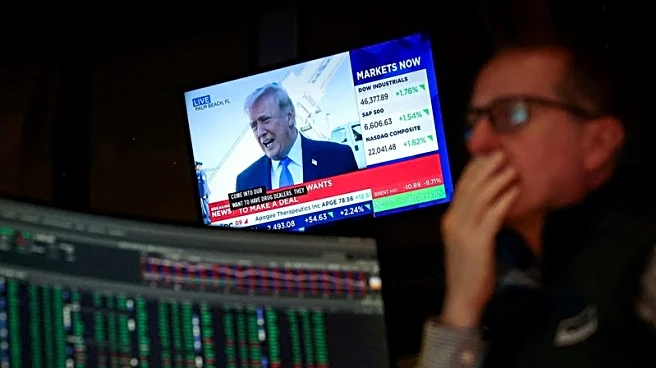
need to increase borrowing costs in response to the current oil price surge. This comes as the U.S. experiences a rough month on Wall Street, with major indexes facing significant losses due to the U.S.-Iran war and its impact on crude oil prices. Powell's comments led to a decrease in rate hike odds among traders, providing some relief to investors worried about the economic implications of the ongoing conflict.
Why It's Important?
Powell's reassurance is significant as it helps stabilize market expectations and provides clarity on the Federal Reserve's monetary policy stance amid geopolitical tensions. The decision to maintain current interest rates could prevent further economic strain on businesses and consumers already facing high fuel costs. This stability is crucial for maintaining investor confidence and preventing further volatility in the financial markets. Additionally, Powell's remarks highlight the Fed's focus on long-term economic stability rather than short-term fluctuations in energy prices, which could influence future policy decisions.
What's Next?
The Federal Reserve will continue to monitor the economic impact of the U.S.-Iran conflict and its effect on oil prices. Investors and policymakers will be watching for any signs of inflationary pressures that could necessitate a change in interest rates. The central bank's future actions will likely depend on the resolution of the geopolitical situation and its impact on global energy markets. Stakeholders, including businesses and consumers, will need to prepare for potential shifts in economic conditions as the situation evolves.