


What's Happening?
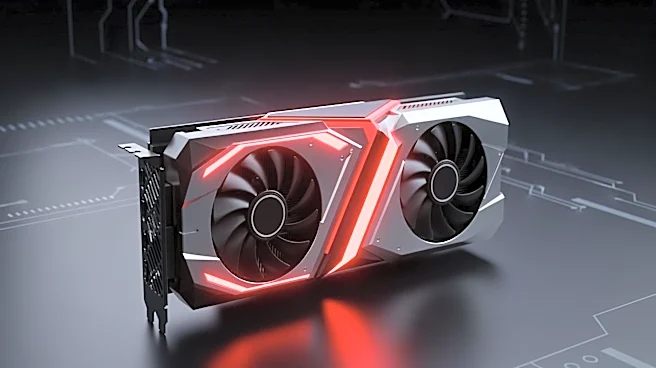
NVIDIA has unveiled DLSS 4.5 Ray Reconstruction, an advanced version of its AI-based denoising and reconstruction model designed for ray-traced and path-traced games. This update, set to release in August, will be accessible to all GeForce RTX GPU users,
including those with RTX 20, 30, 40, and 50 series cards. The new model boasts a 35% increase in compute capability and processes 20% more parameters while maintaining performance levels similar to its predecessor. NVIDIA claims that DLSS 4.5 enhances lighting accuracy, temporal stability, and motion clarity in supported games. At launch, 27 games, including popular titles like Cyberpunk 2077 and Hogwarts Legacy, will support the new model. Additionally, Blender Cycles will integrate DLSS 4.5 as a denoiser in its upcoming version 5.3, targeting real-time ray-traced lighting previews.
Why It's Important?
The introduction of DLSS 4.5 Ray Reconstruction represents a significant advancement in gaming technology, particularly for users of NVIDIA's RTX series GPUs. By improving the visual fidelity and performance of ray-traced games, NVIDIA continues to push the boundaries of what is possible in real-time graphics rendering. This update not only enhances the gaming experience for consumers but also provides game developers with more tools to create visually stunning and immersive environments. The broader adoption of DLSS 4.5 could lead to increased demand for RTX GPUs, potentially boosting NVIDIA's market position and influencing the competitive landscape in the graphics card industry.
What's Next?
As DLSS 4.5 becomes available, game developers and players alike will likely explore its capabilities, potentially leading to further innovations in game design and graphics technology. NVIDIA's continued investment in AI-driven graphics solutions may prompt competitors to accelerate their own advancements in similar technologies. Additionally, the integration of DLSS 4.5 into Blender Cycles suggests potential applications beyond gaming, such as in animation and visual effects, where real-time ray tracing can significantly enhance production workflows.