
What's Happening?
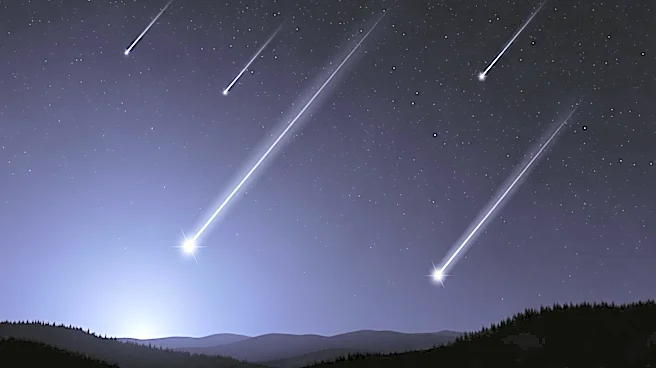
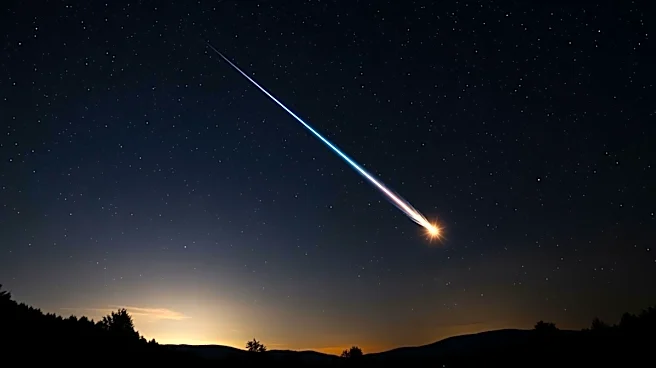
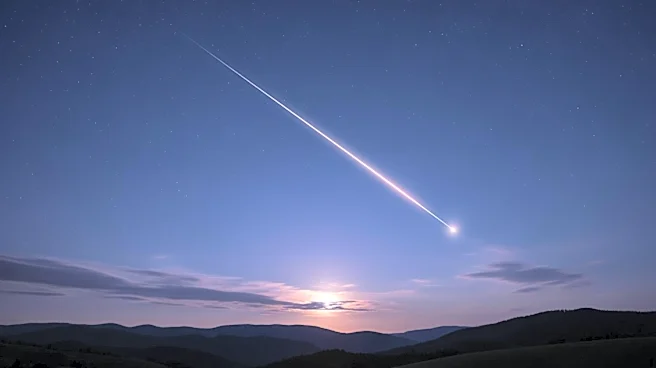
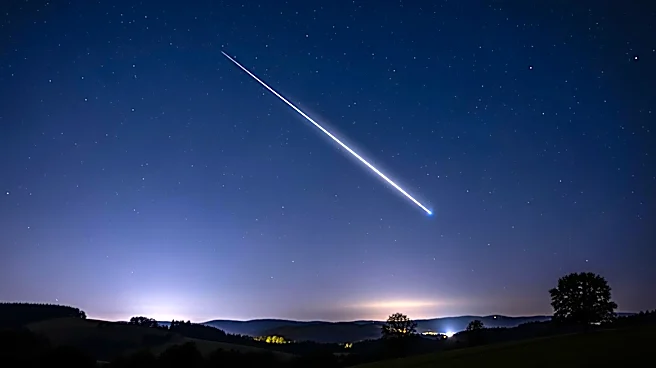
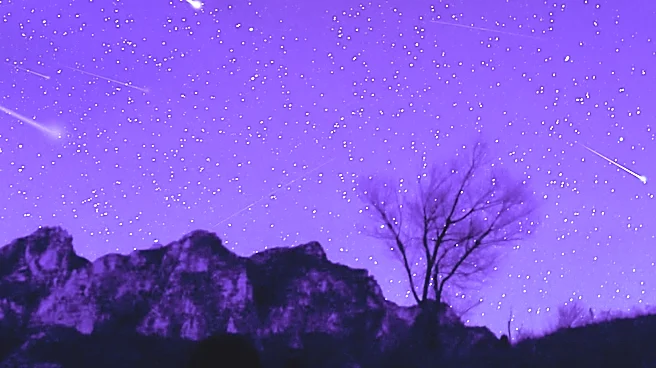
The Lyrid meteor shower is set to peak tonight, offering a celestial display of shooting stars and fireballs. This annual event occurs as Earth passes through the debris left by Comet Thatcher. The Lyrids
are visible from mid to late April, with the best viewing conditions in the Northern Hemisphere. The meteors appear to originate from the constellation Lyra. The shower is expected to produce a significant number of meteors, although they typically lack persistent trails. The Lyrids will overlap with the Eta Aquariids, another meteor shower that peaks in early May.
Why It's Important?
Meteor showers like the Lyrids provide an opportunity for public engagement with astronomy and science. They offer a chance for people to connect with natural phenomena and foster interest in space exploration and science education. The event also highlights the importance of preserving dark skies, free from light pollution, to fully appreciate such celestial events. For scientists, meteor showers offer insights into the composition of comets and the solar system's history, contributing to our understanding of cosmic processes.
What's Next?
Following the Lyrids, the Eta Aquariids meteor shower will peak on May 5-6, providing another opportunity for skywatchers. The Eta Aquariids are known for their speed and bright trails. Observers in both the Northern and Southern Hemispheres will have the chance to view this event. As these meteor showers continue, they may inspire educational programs and public events aimed at increasing awareness and appreciation of astronomy.