



What's Happening?
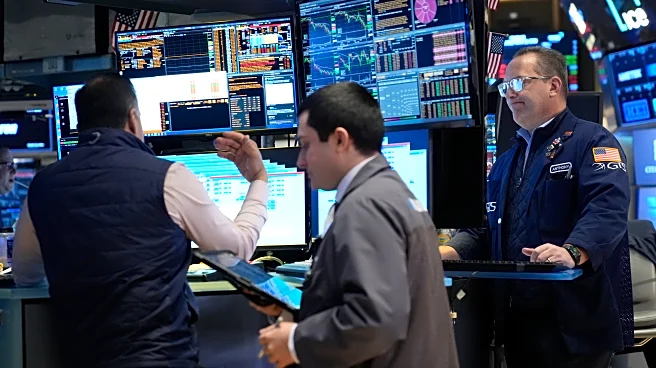
Supermicro's stock experienced a significant drop of 33% following the unsealing of an indictment by the US Attorney’s Office for the Southern District of New York. The indictment charges Yih-Shyan 'Wally' Liaw, co-founder and senior vice president of business
development at Supermicro, along with Ruei-Tsang 'Steven' Chang, a sales manager in Taiwan, and Ting-Wei 'Willy' Sun, a contractor, with conspiring to smuggle servers containing Nvidia chips to China. The alleged scheme involved sending $2.5 billion worth of US-made servers to China between 2024 and 2025, circumventing US export controls. The indictment claims that the accused used a pass-through company in Southeast Asia to disguise the final destination of the servers, which were unlawfully forwarded to China. Supermicro has responded by placing the involved employees on administrative leave and terminating its relationship with the contractor.
Why It's Important?
This development is significant as it highlights ongoing concerns about the enforcement of US export controls, particularly in the technology sector. Supermicro, a major assembler of AI servers using Nvidia components, plays a crucial role in the tech supply chain, and its involvement in such a scandal could have broader implications for US-China trade relations. The charges underscore the challenges faced by US companies in maintaining compliance with export regulations, especially in the context of sensitive technologies like AI. The stock's sharp decline reflects investor concerns about the potential financial and reputational damage to Supermicro, which could also affect Nvidia, given their business relationship. This incident may prompt increased scrutiny and regulatory actions in the tech industry, impacting how companies manage their international operations.
What's Next?
In the wake of these charges, Supermicro will likely face heightened regulatory scrutiny and may need to implement stricter compliance measures to prevent future violations. The company might also experience further financial instability as it navigates the legal proceedings and attempts to restore investor confidence. Additionally, this case could lead to broader discussions and potential policy changes regarding export controls and the safeguarding of sensitive technologies. Other tech companies may also review their compliance practices to avoid similar issues, potentially leading to industry-wide shifts in how international transactions are conducted.