
What's Happening?
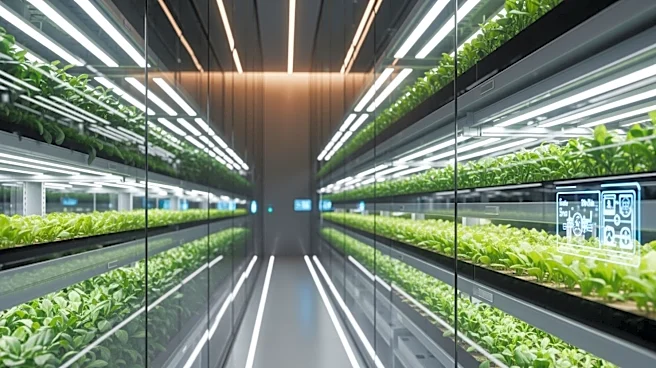
The LED farming market is anticipated to grow significantly, reaching a valuation of $19.868 billion by 2033, according to a recent report. This growth is driven by the increasing adoption of controlled
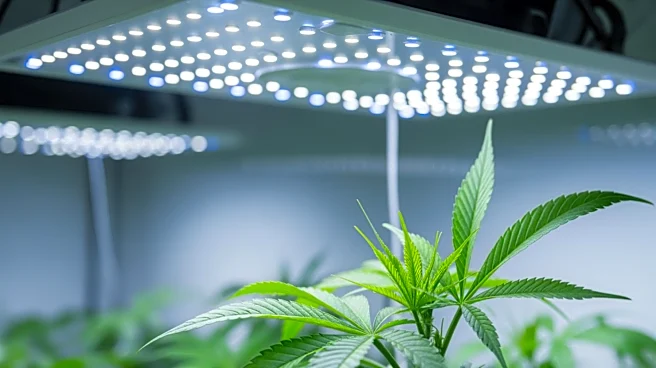
environment agriculture, vertical farming, and smart greenhouse technologies. Europe is leading the market with a 36.06% regional share, attributed to strong adoption of energy-efficient LED lighting initiatives across countries like the Netherlands, Germany, and the UK. The market is experiencing a compound annual growth rate (CAGR) of 11.12% from 2026 to 2033. Key industry players are focusing on advanced spectrum-tunable LED systems and automation-integrated farming infrastructure to enhance crop yield and reduce operational costs. The U.S. is also seeing significant developments, with companies like Oishii expanding AI-driven indoor farming operations using advanced LED systems.
Why It's Important?
The expansion of the LED farming market is crucial for addressing global food security and sustainability challenges. By enabling year-round crop production and reducing dependency on arable land, LED farming technologies support urban agriculture and help meet the rising demand for fresh produce. The adoption of energy-efficient lighting systems also aligns with global sustainability goals by reducing energy consumption in agricultural practices. This market growth presents opportunities for technology providers and agricultural innovators to develop solutions that enhance productivity and resource efficiency. However, challenges such as high initial setup costs and technical complexities may limit adoption among smaller growers.
What's Next?
As the LED farming market continues to expand, further advancements in technology and infrastructure are expected. Companies are likely to invest in research and development to improve the efficiency and scalability of LED systems. Additionally, government policies and incentives supporting sustainable agriculture could drive further adoption. The integration of smart sensors, AI-based climate monitoring, and IoT-enabled lighting controls will likely enhance precision farming capabilities, leading to improved crop quality and yield. Stakeholders in the agricultural sector will need to address challenges related to cost and complexity to ensure broader adoption of these technologies.