


What's Happening?
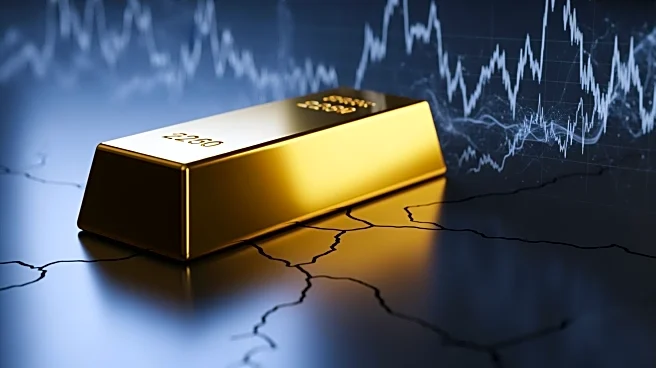
The gold market is experiencing significant volatility as the ongoing conflict in Iran raises inflation fears and impacts global economic growth. Spot gold prices have dropped 15% since the conflict began, with gold-backed exchange-traded funds seeing
substantial outflows. Analysts suggest that while gold traditionally serves as a hedge against inflation, current economic conditions and investor risk aversion are contributing to price fluctuations. The market is also influenced by central bank demand and speculative retail interest, particularly in Asia. Despite short-term volatility, gold's long-term role as a store of wealth remains intact.
Why It's Important?
Gold's volatility reflects broader economic uncertainties and investor sentiment in response to geopolitical tensions. As a key asset class, gold's performance can influence investment strategies and economic forecasts. The current market dynamics highlight the challenges of navigating inflationary pressures and interest rate expectations. For investors, understanding these trends is crucial for portfolio management and risk assessment. The situation also underscores the interconnectedness of global markets and the impact of geopolitical events on financial stability.
What's Next?
The gold market is likely to remain volatile as the Iran conflict continues and global economic conditions evolve. Investors may need to adjust their strategies in response to changing inflation expectations and interest rate policies. Central banks and institutional investors will play a critical role in shaping market trends, with potential implications for gold prices and investment flows. The ongoing geopolitical tensions may also prompt a reevaluation of safe-haven assets and diversification strategies.