



What's Happening?
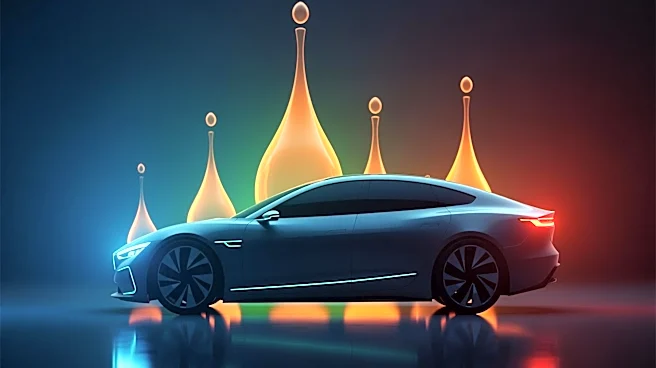
BYD, a leading Chinese electric vehicle manufacturer, expects significant sales growth in 2026 due to the geopolitical fallout from the Iran conflict. The closure of the Strait of Hormuz has led to surging oil prices, reshaping consumer behavior in key
markets. BYD's Chairman, Wang Chuanfu, noted that overseas sales have reached new levels, particularly in Australia, New Zealand, and the Philippines. The company has raised its overseas sales target from 1.3 million to 1.5 million units, capitalizing on increased demand for electric vehicles as consumers shift away from petrol. Despite domestic challenges, including a 19% decline in annual net profit in 2025, BYD is leveraging its position in the global market to drive growth.
Why It's Important?
The Iran conflict and resulting oil price increases have accelerated the demand for electric vehicles, benefiting companies like BYD that are well-positioned in the clean energy sector. This shift highlights the growing importance of energy security and the role of electric vehicles in mitigating the impact of geopolitical tensions. BYD's ability to capitalize on this demand underscores the strategic advantage of Chinese automakers in global markets, where they dominate supply chains for batteries and related infrastructure. The situation presents opportunities for Chinese companies to expand their market presence and influence international trade dynamics.
What's Next?
BYD is likely to continue expanding its overseas market presence, focusing on regions with high demand for electric vehicles. The company may also explore partnerships and collaborations to enhance its global footprint. As oil prices remain volatile, governments may prioritize energy security over trade protectionism, potentially easing tariff barriers for Chinese automakers. This could lead to increased market access and further sales growth for BYD and other Chinese companies. The long-term sustainability of this momentum will depend on geopolitical developments and the ability of Chinese automakers to maintain competitive pricing and innovation.