



What's Happening?
Saint-Gobain India Pvt. Ltd., through its Gyproc business, has launched India's first Near-Net Zero Gypsum Ceiling Tiles plant in Visakhapatnam. This facility represents a significant advancement in sustainable construction manufacturing within the country.
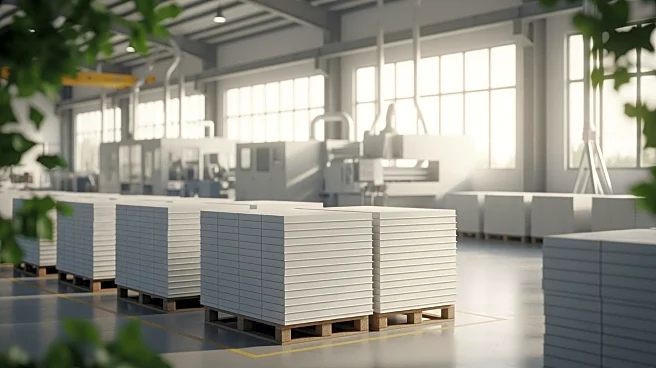
The plant, which began operations in December 2025, boasts an annual production capacity of 5 million square meters and will produce Gyprex® PVC Laminated Gypsum Ceiling Tiles. Located strategically in Visakhapatnam, the facility aims to enhance market access, ensure consistent product quality, and bolster supply capabilities for commercial and institutional construction segments. Sudeep Kolte, Managing Director of Saint-Gobain Gyproc India, emphasized that this investment strengthens the company's manufacturing footprint in India and supports the scaling of low-carbon ceiling solutions closer to key markets. The facility incorporates advanced manufacturing technologies and environmental management systems, including a modern dust collection system, underscoring the company's commitment to operational efficiency, workplace safety, and environmental stewardship.
Why It's Important?
The commissioning of this plant is a pivotal development in India's construction sector, particularly in the context of sustainable building practices. By adopting near-net zero manufacturing processes, Saint-Gobain is contributing to the reduction of environmental impact and promoting energy-efficient building materials. This aligns with the company's global sustainability roadmap, which targets achieving Net Zero Carbon by 2050. The facility is expected to play a crucial role in meeting the increasing demand for sustainable interior building solutions across India's commercial, institutional, and infrastructure projects. This move not only supports the Make in India initiative but also positions Saint-Gobain as a leader in the shift towards environmentally responsible construction solutions. The plant's compliance with international standards ensures durability and quality, further solidifying its importance in the market.
What's Next?
Saint-Gobain's investment in the Visakhapatnam facility is likely to influence other companies in the construction sector to adopt similar sustainable practices. As the demand for eco-friendly building materials grows, the company may expand its production capabilities or introduce new products that align with its sustainability goals. Additionally, the success of this plant could encourage further investments in sustainable manufacturing technologies across India. Stakeholders in the construction industry, including developers and contractors, may increasingly prioritize partnerships with companies that offer low-carbon solutions, thereby driving a broader industry shift towards sustainability.
Beyond the Headlines
The establishment of the Near-Net Zero Gypsum Ceiling Tiles plant in Visakhapatnam highlights the growing importance of integrating sustainability into manufacturing processes. This development may prompt discussions on the ethical responsibilities of corporations in reducing their carbon footprint and contributing to global environmental goals. Furthermore, the plant's focus on operational excellence and environmental stewardship could set new benchmarks for workplace safety and efficiency in the industry. As companies strive to meet sustainability targets, there may be increased collaboration between businesses, government agencies, and environmental organizations to develop policies and practices that support sustainable growth.