





What's Happening?
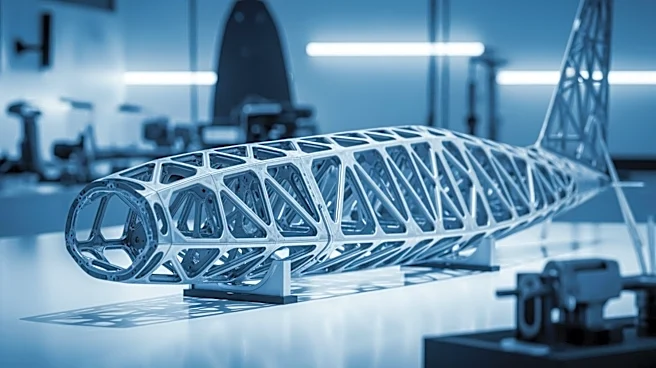
GKN Aerospace, in collaboration with the US Air Force Research Laboratory (AFRL), has initiated the TITAN-AM program, a project valued at $8.4 million. This initiative focuses on the advancement and industrialization of laser wire Directed Energy Deposition
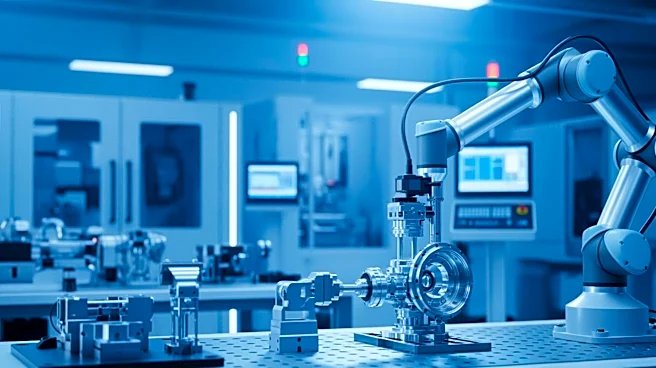
(DED) technology, specifically for titanium aerostructures. The program aims to address five critical areas: the industrialization of laser wire DED processes for large-scale components, development of robust titanium material datasets, advanced simulation capabilities, non-destructive inspection techniques, and demonstration of the technology on selected aerospace components. The project will be executed at GKN Aerospace’s Global Technology Centre in Fort Worth, Texas, which serves as a hub for advanced manufacturing innovation.
Why It's Important?
The TITAN-AM program represents a significant advancement in the field of Additive Manufacturing (AM) for aerospace applications. By focusing on titanium, a material known for its strength and light weight, the program aims to produce more efficient and sustainable aerostructures. This could lead to reduced material waste, shorter production lead times, and increased design flexibility, which are crucial for both defense and commercial aerospace sectors. The collaboration between GKN Aerospace and AFRL underscores the strategic importance of AM technologies in maintaining competitive advantages in aerospace manufacturing, potentially leading to innovations that enhance the performance and sustainability of future aircraft.
What's Next?
As the TITAN-AM program progresses, it is expected to demonstrate the practical applications of laser wire DED technology on operational titanium structural components. This could pave the way for broader adoption of AM technologies in the aerospace industry. Stakeholders, including defense contractors and commercial aerospace companies, will likely monitor the outcomes closely to assess the feasibility of integrating these technologies into their production lines. The success of this program could also influence future policy and investment decisions related to aerospace manufacturing technologies.
Beyond the Headlines
The development of advanced AM technologies like those in the TITAN-AM program could have broader implications beyond immediate aerospace applications. By reducing material waste and enhancing design capabilities, these technologies contribute to more sustainable manufacturing practices. Additionally, the program highlights the growing importance of public-private partnerships in driving technological innovation, which could serve as a model for other industries seeking to leverage cutting-edge technologies for competitive advantage.