


What's Happening?
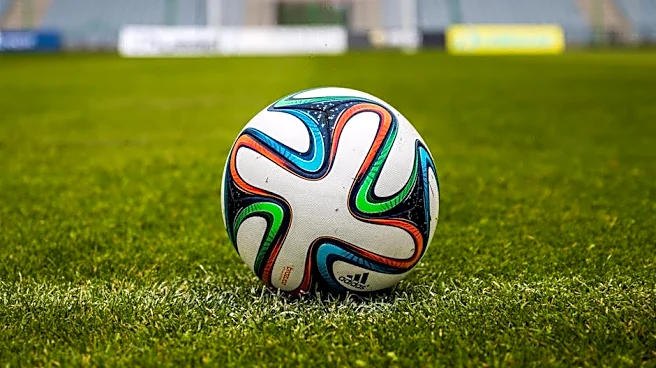
As the FIFA World Cup 2026 approaches, beverage brands are seizing the opportunity to showcase their products on a global stage. The tournament, hosted by the US, Canada, and Mexico, will feature 48 teams and 104 matches, providing a massive platform
for brand exposure. Coca-Cola, a long-time partner of FIFA, returns as the official soft drink sponsor, launching a campaign featuring celebrities like J Balvin and Travis Barker. Michelob Ultra, the official beer sponsor, highlights its non-alcoholic brew, Michelob Ultra Zero, in its campaign, featuring Lionel Messi and Christian Pulisic. Nütrl Vodka Seltzer joins as the official hard seltzer sponsor, offering fans a chance to win World Cup Final tickets. Powerade, the official sports drink, supports athletes with a campaign featuring Lamine Yamal and Rodrygo Goes. Stella Artois and Diageo, with brands like Johnnie Walker and Casamigos, also participate with various campaigns and activations.
Why It's Important?
The FIFA World Cup is not only a major sporting event but also a significant marketing opportunity for brands. With billions of viewers worldwide, the tournament allows beverage companies to reach diverse audiences across different cultures and demographics. For Coca-Cola, Michelob Ultra, and others, this exposure can lead to increased brand recognition and sales. The involvement of high-profile ambassadors like Lionel Messi and David Beckham further amplifies their campaigns, potentially attracting new customers. Additionally, the event's global reach can help these brands strengthen their market positions and expand their consumer base, particularly in regions where they seek growth.
What's Next?
As the World Cup unfolds, beverage brands will continue to roll out their marketing campaigns, leveraging both traditional and digital media to engage fans. The success of these campaigns will likely be measured by increased sales and brand visibility. Post-tournament, brands may analyze consumer engagement and sales data to refine future marketing strategies. The partnerships and activations during the World Cup could also set the stage for future collaborations and sponsorships in other major sporting events, such as the Olympic Games in Los Angeles in 2028.