



What's Happening?
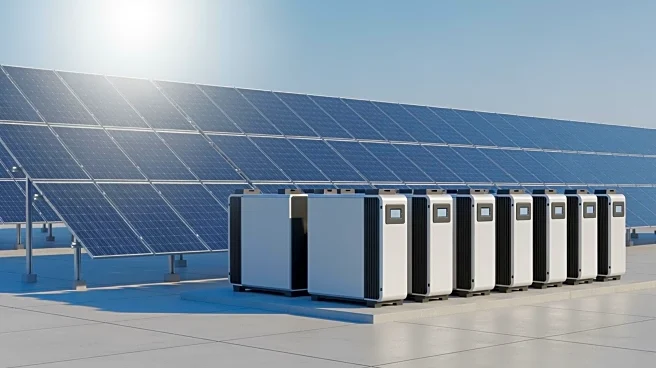
Zeo Energy Corp., a Florida-based solar installer, has entered into a non-binding memorandum of understanding (MOU) with Creekstone Energy to explore the development of a 280 MW solar-plus-storage solution for a data center campus in Millard County, Utah. The project, known as the 'Gigasite,' aims to provide baseload energy generation through a combination of solar power and long-duration storage. Zeo Energy, which acquired Heliogen Inc., a concentrated solar thermal developer, is leveraging its expertise in thermal and chemical storage to design a reliable energy solution. The Gigasite, which began construction in December 2025, is envisioned as a multi-gigawatt, hybrid-generation data center integrating natural gas, solar, and renewable energy sources.
Creekstone plans to deliver over 600 MW of baseload power by 2027, with initial generation from gas-powered energy.
Why It's Important?
This collaboration highlights the growing trend of integrating renewable energy solutions into large-scale infrastructure projects. The Gigasite's development reflects a significant shift towards sustainable energy sources, aiming to meet the increasing power demands of data centers, which are critical for cloud computing and artificial intelligence applications. By incorporating solar and storage technologies, the project seeks to provide a stable and clean energy supply, reducing reliance on fossil fuels. This initiative could set a precedent for future data center developments, emphasizing the importance of sustainable energy solutions in supporting technological advancements and addressing environmental concerns.
What's Next?
Creekstone and Zeo Energy are expected to conduct pre-feasibility studies to finalize the solar-plus-storage solution's design and implementation. The project aims to begin delivering power by 2027, with further phases potentially expanding capacity. As the demand for data center power grows, other companies may follow suit, exploring similar renewable energy integrations. The success of this project could influence energy policies and encourage investment in renewable technologies, potentially leading to broader adoption across various sectors.