


What's Happening?
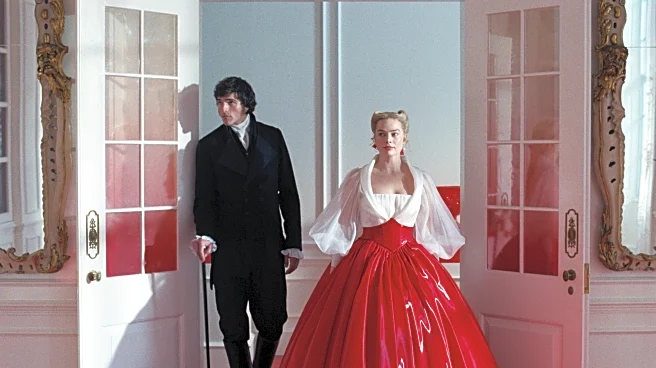
Emerald Fennell's adaptation of 'Wuthering Heights' presents a bold and unconventional take on Emily Brontë's classic novel. The film, starring Margot Robbie and Jacob Elordi, reimagines the Victorian-era story with a modern twist, infusing it with erotic elements and a unique visual style. Fennell, known for her previous works like 'Promising Young Woman,' has taken creative liberties by cutting the original plot in half and focusing on the central characters, Catherine and Heathcliff, while omitting several others. The film explores themes of passion and violence, set against the backdrop of a desolate moor. The adaptation has been described as a 'phony tease,' yet it aims to challenge the conventional portrayal of love and romance in literature.
Why It's Important?
This adaptation of 'Wuthering Heights' is significant as it reflects a broader trend in the film industry towards reimagining classic literature with contemporary sensibilities. By infusing the story with modern themes and a bold visual style, Fennell's film challenges traditional narratives and encourages audiences to engage with classic stories in new ways. This approach could influence future adaptations and inspire filmmakers to explore unconventional storytelling methods. Additionally, the film's release highlights the ongoing interest in period dramas and the potential for these stories to resonate with modern audiences. The success of such adaptations could lead to more diverse and innovative interpretations of classic works, expanding the scope of storytelling in cinema.
What's Next?
As 'Wuthering Heights' hits theaters, its reception will likely influence future adaptations of classic literature. If successful, it could pave the way for more filmmakers to take creative risks with well-known stories. The film's performance at the box office and its critical reception will be closely watched by industry stakeholders, as it may impact decisions on greenlighting similar projects. Additionally, the film's unique approach could spark discussions among audiences and critics about the role of adaptation in preserving and transforming literary heritage. The response to Fennell's vision will be crucial in determining the viability of such bold reinterpretations in the film industry.
Beyond the Headlines
Beyond its immediate impact, 'Wuthering Heights' raises questions about the ethics of adapting classic literature. Fennell's decision to alter the original plot and characters challenges purists' views on fidelity to source material. This adaptation prompts a broader conversation about the balance between honoring an author's original intent and reimagining stories for contemporary audiences. It also highlights the cultural significance of classic literature and its ability to evolve over time. As filmmakers continue to explore new ways of storytelling, the ethical considerations of adaptation will remain a pertinent topic in the industry.