


What's Happening?
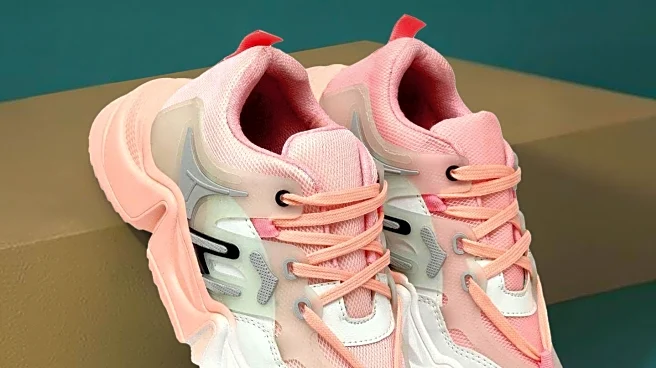
Miu Miu, under the creative direction of Miuccia Prada, has reintroduced the bubble sole sneaker as part of its Fall 2026 collection, showcased at Paris Fashion Week. This sneaker, originally popular in 1999, features a distinctive squared toe and studded
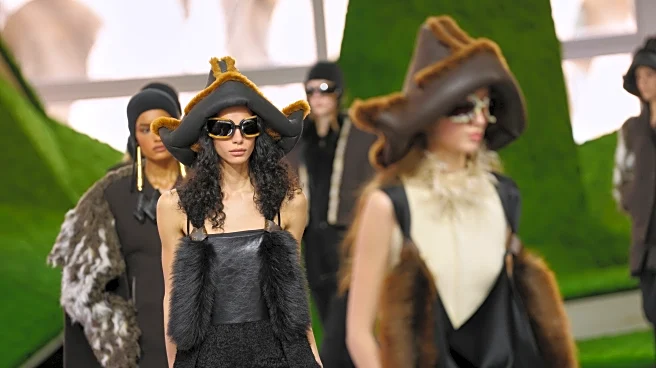
sole, offering a textured look. The updated design includes multitextured elements with suede and earthy color blocks, some adorned with bedazzlements and intricate beading. The collection also features bubble soles on knee-high boots and mule clogs, available in versatile colors like black and tan. The show highlighted Gen Z's penchant for standout accessories, with items like embellished chapkas and crystallized belts complementing the footwear.
Why It's Important?
The revival of the bubble sole sneaker by Miu Miu reflects a broader trend of nostalgia in fashion, particularly the resurgence of 1990s styles. This move taps into the current market demand for retro aesthetics, appealing to both older consumers who remember the original trend and younger generations seeking unique, standout pieces. The collection's emphasis on bold accessories aligns with Gen Z's desire for individuality and expression through fashion. This trend could influence other fashion brands to revisit past styles, potentially impacting design directions and consumer preferences in the industry.
What's Next?
As Miu Miu's Fall 2026 collection gains attention, other fashion houses may follow suit, exploring retro styles to capture consumer interest. The success of this collection could lead to increased collaborations between fashion brands and designers known for iconic past styles. Retailers might also see a rise in demand for vintage-inspired pieces, prompting them to adjust their inventory strategies. Additionally, fashion influencers and social media platforms could play a significant role in popularizing these trends, further driving consumer engagement and sales.
Beyond the Headlines
The reintroduction of the bubble sole sneaker highlights the cyclical nature of fashion, where past trends are continually reimagined for modern audiences. This phenomenon raises questions about sustainability in fashion, as the industry grapples with balancing new production with the environmental impact. The trend also underscores the cultural influence of nostalgia, as consumers seek comfort and familiarity in uncertain times. This could lead to a broader cultural shift, where other industries, such as entertainment and technology, might also explore retro themes to connect with audiences.