



What's Happening?
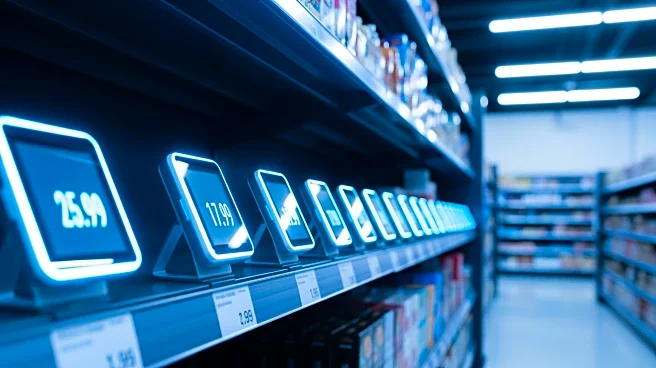
Walmart is set to introduce digital price tags across all its U.S. stores by the end of 2026, replacing traditional paper tags. This move is part of a broader trend in the retail industry to enhance efficiency and adapt to technological advancements.
Digital shelf labels (DSLs) are expected to streamline operations by reducing the time employees spend updating prices, allowing them to focus more on customer service. However, the introduction of DSLs has sparked concerns among lawmakers and consumers about the potential for surge pricing. Critics argue that the technology could be used to implement dynamic pricing strategies that might lead to price increases. Despite these concerns, Walmart and other retailers like Kroger assert that the technology is intended to provide clear and consistent pricing information, aligning with online prices and weekly promotions.
Why It's Important?
The implementation of digital price tags by Walmart represents a significant shift in the retail landscape, potentially setting a precedent for other retailers. This change could lead to increased operational efficiency and cost savings, benefiting both the company and its customers. However, the concerns about surge pricing highlight the need for transparency and consumer protection. If not properly regulated, the technology could be used to exploit consumers, especially in a time of economic uncertainty and inflation. The debate over DSLs underscores the tension between technological innovation and consumer rights, with potential implications for retail pricing strategies and legislative actions.
What's Next?
As Walmart and other retailers continue to roll out digital price tags, legislative actions may follow. Lawmakers like Sen. Ben Ray Luján and Congresswoman Val Hoyle are advocating for regulations to prevent potential misuse of the technology. Proposed legislation aims to ban DSLs in large grocery stores to protect consumers from price gouging. The outcome of these legislative efforts will likely influence how retailers implement and utilize digital pricing technologies. Retailers will need to balance technological advancements with consumer trust and regulatory compliance to ensure the successful adoption of DSLs.