


What's Happening?
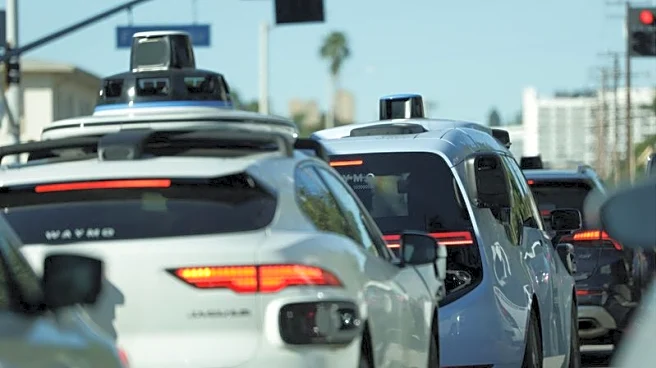
Waymo has partnered with Stanford Athletics to introduce a fully autonomous ride-hailing service on the Stanford University campus. This initiative aims to enhance mobility and accessibility for students, faculty, and visitors. The service will operate at key locations such as the Oval and Museum Way during high-volume event days, and at the Oval and Stanford Visitor Center on non-event days. The program also expands rideshare access to Escondido Village and the Stanford Visitor Center. The partnership marks Waymo's first collaboration with a college athletics program, reflecting a long-standing history of innovation between Waymo and Stanford, where autonomous vehicle technology initially developed. The program will be evaluated with feedback
from the Stanford community, encouraging input on service experience and pick-up/drop-off locations.
Why It's Important?
This partnership represents a significant step in integrating autonomous vehicle technology into everyday campus life, potentially setting a precedent for other universities. By enhancing transportation options, the initiative could improve campus accessibility and reduce traffic congestion. For Waymo, this collaboration provides a platform to showcase its technology in a real-world setting, potentially influencing future partnerships and developments in autonomous transportation. The initiative also highlights the role of innovation in improving urban mobility solutions, which could have broader implications for transportation policies and infrastructure planning.
What's Next?
The program will undergo continuous evaluation, with feedback from the Stanford community playing a crucial role in its development. This feedback will help refine the service and address any operational challenges. As the partnership progresses, there may be opportunities for further integration of autonomous vehicles in other aspects of campus life, potentially influencing transportation strategies at other educational institutions. The success of this initiative could lead to expanded partnerships and increased adoption of autonomous ride-hailing services in other regions.