



What's Happening?
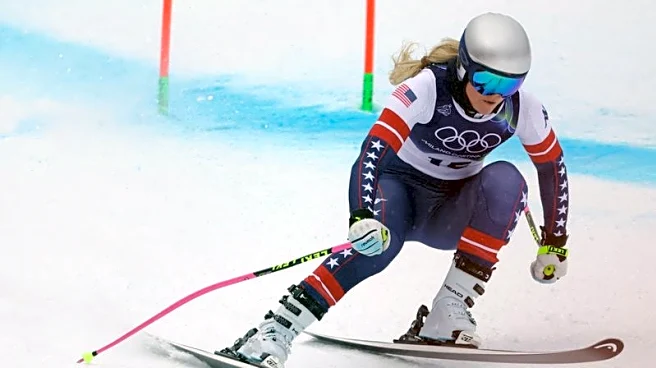
Lindsey Vonn, the American alpine skier, has addressed critics who labeled her 'selfish' for retaining her Olympic spot after a leg injury at the 2026 Milan Cortina Olympics. In a recent Instagram post, Vonn reflected on her season, highlighting her achievements
despite the setback. She emphasized her top-three FIS rankings in downhill and Super G, along with two wins and seven podium finishes in eight races. Vonn, who retired in 2019 due to injuries, made a comeback in 2024 after a total knee replacement. Her return to competition was marked by her inclusion in the Milan Cortina roster alongside Mikaela Shiffrin, based on their FIS rankings. Vonn has undergone multiple surgeries following her February crash, sharing images of her recovery process on social media.
Why It's Important?
Vonn's situation highlights the challenges athletes face in balancing personal health with competitive aspirations. Her decision to compete despite injuries underscores the pressures elite athletes endure to maintain their status and fulfill expectations. The criticism she faced reflects broader societal debates about the rights of athletes to make decisions about their careers and health. Vonn's response may influence public perceptions of athlete welfare and the importance of supporting athletes through recovery and comeback journeys. Her story also raises questions about the criteria for Olympic selection and the role of rankings in determining athlete participation.
What's Next?
Vonn's ongoing recovery and future in competitive skiing remain uncertain, but her experience may prompt discussions about athlete health management and the support systems available to them. The skiing community and sports organizations might consider revising policies to better accommodate athletes recovering from injuries. Vonn's case could also lead to increased advocacy for athlete rights and the development of more comprehensive support networks for those facing similar challenges. As Vonn continues her recovery, her journey may serve as a case study for balancing competitive drive with personal well-being in sports.