
What's Happening?
Cadwalader, Wickersham & Taft, the oldest law firm in New York City, has merged with Hogan Lovells after facing significant challenges due to executive orders signed by President Trump. These orders stripped
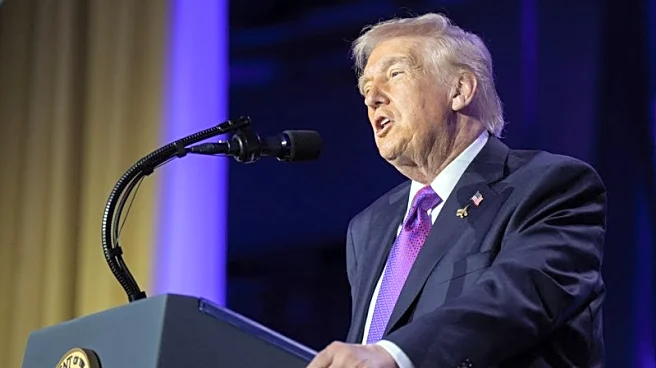
security clearances from attorneys at certain firms and terminated government contracts, leading Cadwalader to pledge $100 million in pro bono work to support the president's priorities. This decision resulted in a talent exodus, forcing the firm into a merger with Hogan Lovells, a larger firm with a revenue of nearly $3 billion last year. The merger creates a $3.6 billion megafirm with over 3,000 lawyers, marking the largest-ever merger in the legal industry.
Why It's Important?
The merger between Cadwalader and Hogan Lovells highlights the significant impact of political decisions on the legal industry. Cadwalader's decision to comply with President Trump's executive orders led to a loss of top attorneys and ultimately forced the firm into a merger. This development underscores the importance of strategic decision-making in maintaining a firm's stability and reputation. The merger strengthens Hogan Lovells' finance practice in New York, potentially reshaping the competitive landscape of the legal industry. Firms that opposed the executive orders and won in court may gain a competitive edge, as they retained their talent and avoided the reputational damage faced by Cadwalader.
What's Next?
The newly merged firm will be led by Hogan Lovells' CEO, with Cadwalader's co-managing partners joining the management committee. The merger is expected to consolidate Hogan Lovells' position in the finance sector, particularly in New York. The firm may focus on integrating the teams and aligning their strategic goals to leverage the combined resources effectively. The legal industry will likely monitor the merger's impact on client relationships and market positioning, as well as any potential changes in pro bono commitments previously made by Cadwalader.