



What's Happening?
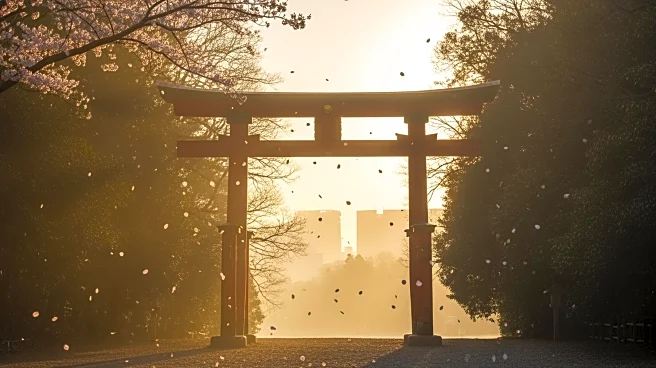
Yoshitoshi Shinomiya, a traditional Japanese-style painter and visual collaborator with renowned filmmakers like Makoto Shinkai, has made his directorial debut with the anime feature 'A New Dawn'. The film premiered at the Berlin International Film Festival and is set in a rural town facing redevelopment. It follows Keitaro, the son of a vanished fireworks artisan, who attempts to create a mythical firework called 'Shuhari' as a typhoon approaches. The narrative explores themes of cultural heritage, environmental change, and the tension between tradition and modernity. Shinomiya's work is noted for its meticulous attention to light and texture, reflecting his background in painting and his resistance to digital smoothness.
Why It's Important?
'A New Dawn' addresses
significant cultural and environmental issues relevant to contemporary Japan and beyond. The film's exploration of the clash between traditional practices and modern development resonates with global audiences facing similar challenges. By focusing on the preservation of cultural heritage amidst environmental and societal changes, Shinomiya's work highlights the importance of maintaining cultural identity in a rapidly evolving world. The film's themes of family legacy and community evolution are universally relatable, offering insights into how societies can navigate the pressures of modernization while honoring their past.
What's Next?
Following its premiere, 'A New Dawn' may influence discussions on cultural preservation and environmental sustainability in Japan and internationally. The film's reception at the Berlin International Film Festival could lead to further screenings and distribution opportunities, potentially sparking broader conversations about the balance between development and tradition. As audiences engage with the film's themes, there may be increased interest in supporting cultural initiatives that protect traditional practices while adapting to modern realities.
Beyond the Headlines
The film's use of the 'Shuhari' metaphor, which represents the stages of mastery and growth, offers a deeper philosophical reflection on personal and cultural evolution. This concept, rooted in Japanese tradition, underscores the film's narrative and invites viewers to consider how cultural practices can be adapted and preserved in changing environments. Shinomiya's artistic approach, emphasizing handcrafted visuals over digital techniques, reinforces the film's message about the value of craftsmanship and the human touch in art and culture.