


What's Happening?
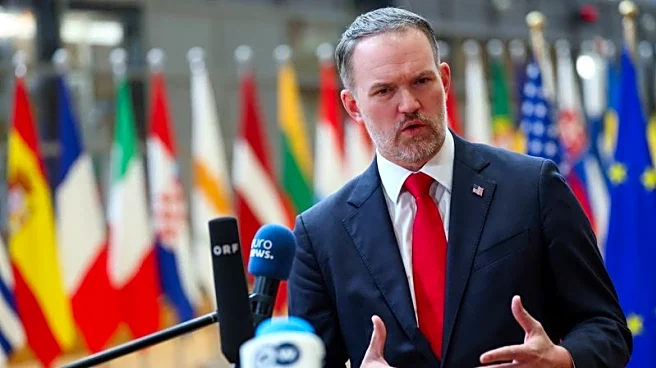
The White House's National Energy Dominance Council (NEDC) has announced significant energy agreements totaling at least $30 billion during the inaugural Indo-Pacific Energy Security Ministerial and Business Forum in Tokyo. Co-hosted with Japan's Ministry
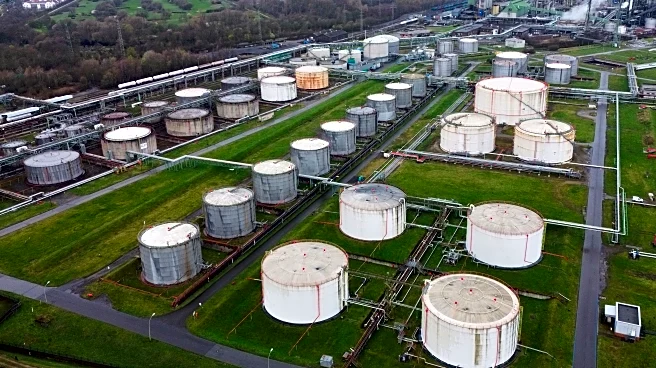
of Economy, Trade, and Industry, the event aims to bolster U.S. energy exports and secure critical mineral supplies. High-level U.S. officials, including Interior Secretary Doug Burgum and Energy Secretary Chris Wright, are participating in the forum, which seeks to diversify supply chains and counter geopolitical influences from China and Russia. The agreements cover sectors such as liquefied natural gas (LNG), coal, nuclear power, and critical minerals, with notable investments including a $1.5 billion commitment by JERA in Louisiana's Haynesville Shale basin and a $600 million upgrade to southern U.S. ports for crude oil exports.
Why It's Important?
This initiative underscores the U.S. strategy to enhance its energy dominance and secure supply chains amid rising global energy prices and geopolitical tensions. By strengthening partnerships with Asia-Pacific nations, the U.S. aims to reduce reliance on adversarial countries like China and Russia. The agreements are expected to boost U.S. energy exports, create jobs, and stimulate economic growth. Additionally, the focus on critical minerals and infrastructure upgrades aligns with broader efforts to ensure energy security and transition to cleaner energy sources. The collaboration with Japan, which has committed up to $550 billion in U.S. investments, further solidifies the economic ties between the two nations.
What's Next?
The projects announced at the Tokyo forum are set to roll out over the coming years, with phased implementation across energy infrastructure, manufacturing, and supply chain enhancements. The U.S. will continue to engage with international partners to expand its energy footprint and counteract geopolitical challenges. The success of these initiatives could influence future U.S. energy policies and international collaborations, potentially leading to further investments and agreements in the Indo-Pacific region.